

 Unter
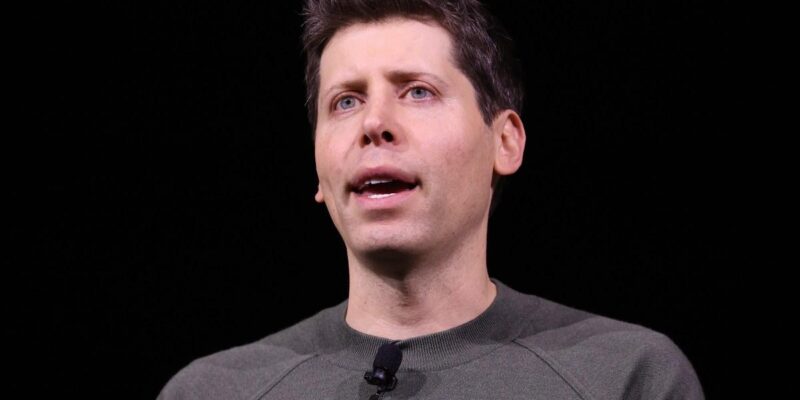
Sam Altman argues RAM is better used in data centers
OpenAI CEO Sam Altman said on a podcast that, from a global resource-allocation perspective, it is “terrible” to have scarce RAM sitting in individual PCs rather than concentrated in data centers. The comment, reported by The Verge, comes amid discussion of supply-chain constraints and continued interest in running AI models locally.
According to the supplied report, Altman was asked about shortages including an ongoing RAM shortage during an appearance on the Cheeky Pint podcast. In the quoted remarks, he pushed back on the idea that open-source models and local inference mean the industry will no longer need large amounts of centralized infrastructure.
That matters because it highlights a basic tension in AI deployment. Local inference can offer privacy, offline use and lower latency for some tasks, while cloud inference can pool expensive compute and memory across many users. Altman’s argument, as quoted, is that when memory is constrained globally, centralizing it may be more efficient than distributing it across millions of underused machines.
Why the remark matters for AI infrastructure
The supplied source does not include a full transcript of Altman’s answer, so the exact scope of his claim remains unclear. Still, the reported position aligns with a broader industry debate: whether future AI usage will shift materially toward on-device models, or remain heavily dependent on hyperscale data centers with shared GPUs, RAM and networking.
A practical implication is cost and capacity planning. In a hypothetical enterprise use case, a company deciding whether to run an internal assistant on employee laptops or through a central cloud service would weigh memory availability, security controls, update management and peak-demand efficiency. Altman’s comments suggest he sees the shared-infrastructure model as the better answer when hardware components are scarce.
Was weiterhin unklar bleibt
The RSS material does not say whether Altman was speaking specifically about consumer PCs, enterprise workstations, or AI hardware more broadly. It also does not establish how OpenAI expects the balance between local and cloud inference to evolve over time, only that Altman challenged the assumption that open-source and local models remove the need for data-center investment.
That leaves an open question for the market: if memory shortages persist, will AI vendors prioritize centralized services even more aggressively, or will smaller local models still carve out a meaningful role despite hardware constraints?
Quelle: Ursprünglicher Bericht von The Verge. Die oben genannten Aussagen spiegeln die in dieser Quelle enthaltenen Informationen wider.
Entdecken Sie weitere Berichte zu diesem Thema in unserem Rubrik „KI-Nachrichten“.
Praktische KI-Anwendungen
Partner note — Implementi.ai: For businesses deciding what should run locally versus in the cloud, the operational challenge is often not model theory but workflow overhead after meetings and decisions. Tools such as an AI meeting assistant for notes and follow-up tasks can help teams centralise routine knowledge work without requiring every employee device to handle heavier AI workloads.


