

 Unter
Unter Retro-Futurismus trifft auf KI: Ein Blick in die Zukunft durch ein Vintage-Objektiv
A Daydream of the Digital Future
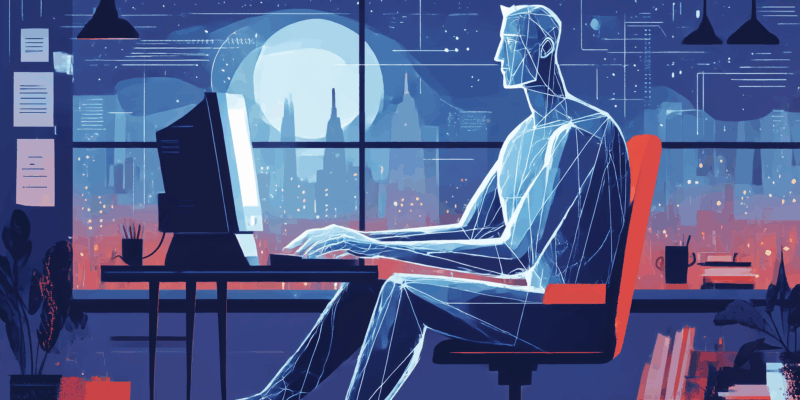
Picture this: a 3D wireframe figure, straight out of classic computer graphics, calmly hunched over a luminous screen. Behind, the city skyline glows under a moonlit sky, shimmering with that optimistic energy you only get from retro-futurism. This scene wouldn’t look out of place on the desk of a 1960s dreamer, imagining what the world would look like a century later. The whole thing strikes a note between nostalgia and the boldness of digital frontiers, blurring the edges between eras.
Connecting Yesterday’s Design with Tomorrow’s Intelligence
There’s an undeniable magic in combining mid-century style—think clean shapes, pastel colors, and unapologetic optimism—with the cutting-edge pulse of machine intelligence. Together, they create a visual language that both grounds and propels us, hinting at our persistent longing for a future brimming with hope and ingenuity, even as our tools become unfamiliar and radically advanced.
Now, OpenAI’s latest development throws this dynamic into even sharper relief. Their new ChatGPT agent isn’t just another chatbot; it’s designed to act like a virtual version of yourself inside a secure digital environment. It can log in to websites, handle emails, navigate different web apps, grab files, and craft content, almost as if you’d handed over a digital set of keys to your online life.
This new power raises a timely point about security. With OpenAI’s approach, everything the agent does stays inside a tightly guarded sandbox, so your privacy is less likely to slip through the cracks. It all sounds like something lifted from science fiction, but its roots are firmly in our very real concerns about digital trust and safety.
Nostalgic Style as a Bridge to What’s Next
What’s striking isn’t just the technology, but the way it’s wrapped—this illustration isn’t merely eye candy. It’s an invitation to channel the optimism of yesteryear and fuse it with today’s technological ambitions. In a world increasingly shrouded in abstract algorithms and unseen infrastructure, that retro flavor can be a reminder: our tools may change, but the human impulse to hope, remember, and imagine remains constant.
Yes, the line between human and machine gets blurrier by the day. And yes, that can be unsettling. But images (and moments) like these remind us that technology ultimately reflects our imagination, our fears, and—maybe most of all—our dreams. Technology’s future may be fast approaching, but it still makes space for echoes of the past.
If you’re eager for more details about the latest from OpenAI, you’ll find the full story here: VentureBeat.


