

 Unter
Unter Warum Tech-Giganten KI-Datenzentren in den Orbit bringen wollen
AI Infrastructure: Venturing into Space
Historically, the vast expanse of space has been an exciting playground for tech billionaires, allowing them to test rockets, dream about Martian colonies, and break free from Earth’s restrictions. However, by 2025, the cosmic horizon seems to be promising an entirely new kind of business venture – erecting data centers in space.
The rapid emergence of artificial intelligence has sparked a fierce competition for data center expansion. There’s been a frenzied rush among businesses to develop large facilities capable of supporting the immense computing power required by language models, real-time processing, and large-scale machine learning. Within this year alone, proposals for six new mega data centers have surfaced. Each demands multiple gigawatts of power – a bar set exceedingly higher than anything we imagined in scope just last year.
Earthly Concerns and Orbiting Solutions
Back home, however, these gigantic data centers are proving to be a cause for concern. Communities are starting to resist their establishment due to their massive consumption of electricity and water, scant creation of jobs, and significant environmental impact. These issues, combined with the rising awareness of data centers’ cost, are forcing this industry to literally turn their gaze to the stars.
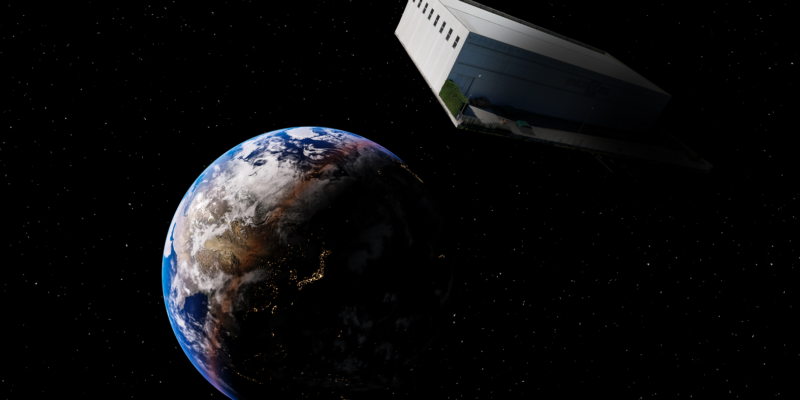
The prospect of establishing data centers in orbit isn’t as crazy as it may sound. Picture facilities floating in low-Earth orbit, harnessing solar energy for power, and free from terrestrial land-use and environmental controversies. In an ideal scenario, these cosmic data centers would provide clean energy, efficient cooling systems, and continuous service – all while saving Earth’s finite resources.
The Flip Side: Challenges and Opportunities
Obviously, implementing such a revolutionary infrastructure doesn’t come without its share of problems. The costs of launching objects into space are still formidable, overseeing maintenance operations is undeniably complex, and the growing worries about space clutter and interference with astronomical observations cannot be ignored. Despite these issues, the colossal benefits on the horizon are enough to keep technology companies heavily invested in this celestial game of chance.
From just a billionaire’s extravagant pastime, space exploration seems to be quickly morphing into a commercial necessity. Given the exponential upsurge in AI demand and the mounting pressure on Earth’s resources, space is not just an astropioneer’s dream anymore. Whether these proposed orbiting data centers materialize or simply remain within the realm of futuristic experiments, one fact stands resolute. The ‘cloud’ – in a very literal sense – will soon be afloat somewhere above our heads.


