

 Przez
Przez Caitlin Morris łączy technologię, edukację i więzi międzyludzkie, aby ponownie przemyśleć naukę online
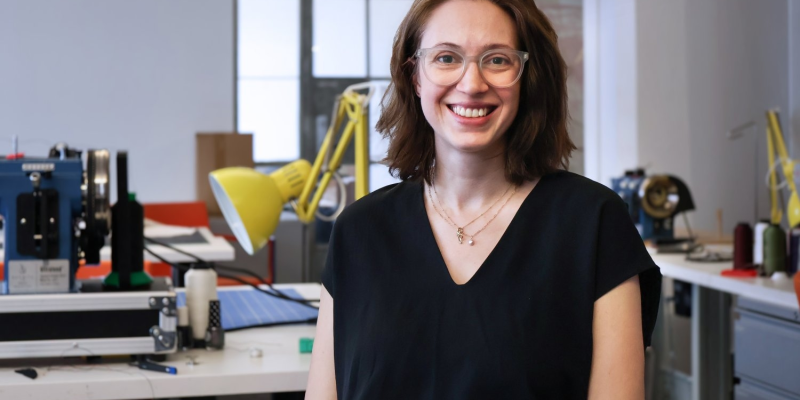
Picture a researcher. Maybe you see someone in a white coat, hunched over lab equipment in a sterile room. But this image doesn’t come close to describing Caitlin Morris—a person who fits as naturally in a community workshop as she does in the halls of MIT. Caitlin is a fellow at the MIT Morningside Academy for Design (MAD), blending her skills as an architect, artist, educator, and coder. Her passion isn’t just about pushing the boundaries of technology; it’s about building bridges between people, creativity, and digital learning.
Caitlin’s story starts in rural upstate New York. Her upbringing was rooted in hands-on creativity: family dinners made from scratch, afternoons working with tools, learning how things fit together. From sewing and cooking to building with her dad, making was a way of life. And it’s that curiosity—sparked early and encouraged every day—that underpins her approach to research and learning today.
Communities That Teach and Inspire
Instead of letting learning mean just memorizing textbooks, Caitlin found her stride in project-based communities. She recalls the late-night hours spent teaching herself to code, often with the help of others across online forums and creative coding platforms. For her, this collaborative, messy, and experimental environment was a revelation. There was room not just to seek answers but also to share and create—outside the walls of a traditional classroom.
And she doesn’t just keep this way of learning to herself. Caitlin’s made it a mission to open those doors for others—helping organize the MIT Media Lab’s Festival of Learning, hosting creative meetups, contributing code to open-source communities. It’s all about creating supportive, open spaces where anyone can jump in, experiment, and help someone else along the way.
Design as a Social Act
For Caitlin, art and design aren’t separate from learning—they’re part of the same puzzle. Her years building and leading communities, both online and in-person, have shown the value of human connection in sparking curiosity and motivation. Now, her research is focused on reimagining how digital spaces can feel as welcoming and interactive as a real-world studio, making technology a tool for engagement, rather than isolation.
But Caitlin’s eyes are wide open about the realities of technology and its future. As a doctoral student at MIT Media Lab’s Fluid Interfaces Group, she’s deep into exploring how people learn—physically, socially, and in spaces where human teachers work alongside AI. The goal isn’t to choose between the warmth of in-person interaction or the reach of digital learning, but to find ways to get the best of both worlds and design experiences that actually work for real people.
Looking ahead, Caitlin’s already thinking about what comes next—not just for her, but for education itself. As AI rapidly changes how we teach and learn, she wants to help communities adapt, navigating the blurred lines between “physical” and “virtual” space. “What should we do with this ‘physical space versus virtual space’ divide?” she asks. That big, open-ended question is the heartbeat of her work—and the reason her journey from a carpenter’s workshop in New York to MIT’s design academy feels like a blueprint for the future of learning.
Original article on MIT News: https://news.mit.edu/2025/caitlin-morris-combines-tech-education-human-connection-improve-online-learning-0617


