

 Przez
Przez Uwolnienie mocy eksploracji danych i modelowania w spersonalizowanych rekomendacjach
If you’ve ever wondered how Netflix knows just the kind of movies you’ll love or how Spotify serves up songs as if it reads your mind, the answer lies in the fascinating world of data mining and modeling. These aren’t just technical buzzwords; they are the gears turning behind the scenes of our favorite recommendation systems, helping to personalize our digital lives.
But what goes into this process? Picture data mining as a kind of digital detective work. It involves sifting through immense amounts of information to spot meaningful patterns, trends, and connections. The goal: to transform raw, messy data into insights that can make a real difference. Techniques like classification and clustering let systems group and analyze behaviors, while association rules reveal the hidden links between different preferences or actions.
Once all that data has been explored and insights have been drawn, the next step is modeling. Here, clever mathematical models and machine learning algorithms take the reins. Unlike traditional programming, where every instruction is predetermined, these models learn and adapt by themselves. With every new data point—every click, watch, or like—they get smarter, tailoring their suggestions to fit ever-shifting tastes. This is what makes recommendation systems so responsive and individualized.
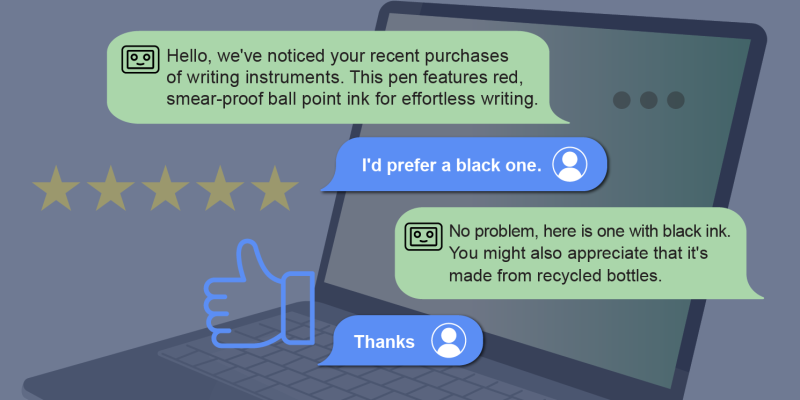
One of the latest leaps in this field comes from Google Research, which has introduced an approach called ReGen. What makes ReGen special is how it blends the science of modeling with the power of language understanding. Instead of relying only on numbers or rigid feedback, ReGen lets people describe what they want in plain, everyday language. The system “listens,” picks up on these cues, and refines its recommendations accordingly.
This is a pretty big shift. Old-school recommendations mostly worked with structured data—what you watched, what you bought, how many stars you gave something. Now, by bringing natural language into the mix, systems can interact with us in more flexible and intuitive ways. This doesn’t just boost the accuracy of what you see; it opens doors for more people to benefit from technology that truly understands them.
Looking ahead, the fusion of data mining, advanced modeling, and natural language processing is paving the way for recommendation systems that are more insightful and adaptive than ever. Thanks to innovations like ReGen, we’re getting closer to a digital world where machines “get” us—not just in numbers, but in words and feelings. These developments are transforming recommendation systems from cold, data-driven mechanisms into tools that actually feel human.
So, next time you get a suggestion that feels strangely spot-on, remember: it’s the result of powerful data mining and modeling, now supercharged by thoughtful language processing. With these tools evolving at breakneck speed, we’re entering a new era of recommendations tailored not just to our habits, but to our human side as well.
Read the source news here: https://research.google/blog/regen-empowering-personalized-recommendations-with-natural-language/


