

 By
By AI Liability Insurance: The Next Step in Safeguarding Businesses from AI Failures
The Advent of AI in Business: New Risks and Opportunities
In the modern world, businesses are leaning more towards Artificial Intelligence (AI) than ever before. They are harnessing the power of AI to handle diverse tasks such as customer service, fraud detection, logistics, and even healthcare diagnostics. With such boundless applications, AI is undoubtedly shaping the future of industries, optimizing efficiency, and decision-making. However, the integration of AI doesn’t come without its challenges. Crucially, it brings forth a unique set of risks that existing insurance policies don’t cover.
AI’s adoption is witnessing an unprecedented rise. By the end of 2024, more than 70% of businesses across various sectors like finance, healthcare, and retail had integrated AI into their operations. Even so, the vast majority of these businesses are struggling to churn out consistent returns from their AI investments, painting a clear picture of the AI risk landscape. Compared to traditional IT systems, AI poses significantly different risks. For instance, imagine a model producing “AI hallucinations,” where it generates plausible but false data, misleading users, and potentially leading to disastrous decisions.
Moreover, there are also concerns like “model drift,” where AI’s accuracy degrades over time due to shifting data patterns. It might lead to severe consequences like fraud detection failures. And the threats don’t end there. The business world is also witnessing rising incidents of “data poisoning”, where attackers manipulate AI’s training data to corrupt its behavior. Other escalating risks include privacy breaches, biased algorithms, and ethical predicaments. With regulatory bodies like the European Union introducing regulations such as the AI Act, businesses are under increasing pressure to ensure transparency and accountability in their AI operations.
Navigating the Challenges with AI Liability Insurance
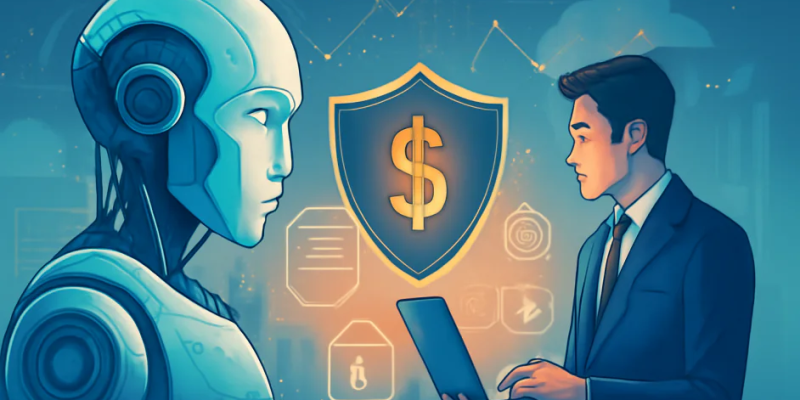
To counter these emerging risks, AI liability insurance has surfaced as a specialized coverage solution. It is uniquely tailored to account for the distinctive challenges AI systems, whether in-house or sourced from third-party vendors, present. Unlike traditional Errors & Omissions (E&O) insurance or cyber insurance, AI liability insurance typically covers failures in AI systems that result in financial or physical damage, misleading or incorrect AI outputs (hallucinations), unauthorized data usage or intellectual property in AI training, penalties from non-compliance with specific AI regulations, and AI-related security breaches. It also covers legal defense costs in case of AI-related lawsuits or investigations.
Governments around the world are tightening AI regulations, a sign for companies to buckle up and safeguard themselves against unpredictable AI outcomes. To serve this need, insurance companies have started providing AI-specific insurance. For instance, Coalition Insurance provides cover for risks like deepfake fraud resulting from generative AI technologies. Relm Insurance’s PONTAAI product addresses bias, IP violations, and compliance issues. Munich Re’s aiSure™ policy protects against AI performance failures. AXA XL and Chaucer Group offer specialized policies for AI-related liabilities, demonstrating the trend set for responsible AI use.
Understanding AI Liability Insurance: Who Does It Serve?
AI liability insurance serves a broad spectrum of industries. In healthcare, misdiagnoses or treatment errors due to AI can trigger severe repercussions. In the financial sector, faulty credit scoring or fraud detection models can lead to tailspins of compliance issues and losses. The autonomous vehicles industry heavily relies on AI, and any failure could result in devastating accidents. Even in marketing and content creation, generative AI tools can inadvertently churn out copyrighted or misleading content. The cybersecurity domain demands reliability in AI-driven threat detection tools to prevent potential data breaches.
These real-world events highlight the pressing need for AI-specific insurance. From a New York lawyer submitting a legal brief laden with fake case citations generated by ChatGPT, to Air Canada’s chatbot promising a non-existent bereavement fare, AI errors can indeed blow up into costly legal and financial blunders. Therefore, AI liability insurance can afford the much-needed cushioning for businesses against these shocks, ensuring operational continuity.
To put it simply, AI liability insurance grants more than just financial coverage. It fortifies businesses against the potential legal and reputational fallout from AI errors and ensures peace of mind in this rapidly evolving landscape. Moreover, these policies can be personalized to align with a company’s specific AI usage, offering global coverage, and encouraging best practices like transparency protocols and regular AI risk audits. As AI integration becomes commonplace, businesses must regularly evaluate their AI risk exposure and update their insurance policies to sync with the evolving regulations and technologies.
For additional information, check out the original article at Unite.AI.


