

 By
By Refashioning the Future: How Modular Clothing Design Could Revolutionize Sustainable Fashion
The world of fashion is a never-ending carousel where trends come and go faster than we can blink. This leaves us scrambling to keep up, spending more than we really need to maintain a wardrobe that stays relevant. But have you ever considered the effect this has on our environment? The fashion industry contributes a staggering 92 million tons of textile waste every year. Wouldn’t it be great if there was a way to keep our fashion choices fresh, without it leading to such wastage?
Refashion: A Game-Changer in Fashion Design
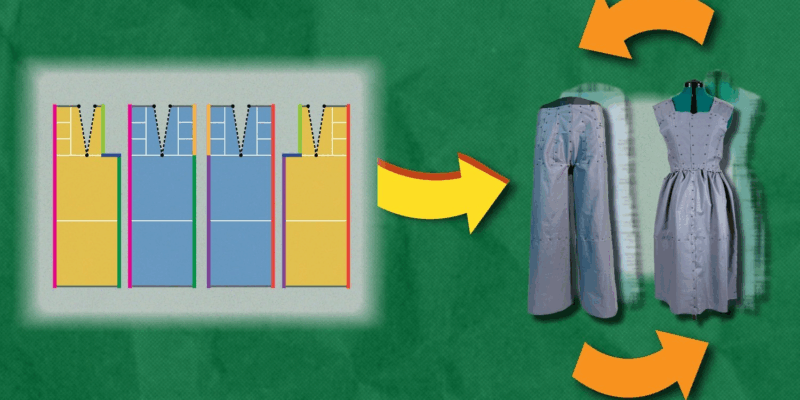
Enter Refashion, an innovative software system developed by researchers at MIT’s Computer Science and Artificial Intelligence Laboratory (CSAIL) and Adobe. By breaking down garments into interchangeable components, it serves as a flexible platform that encourages creative and eco-friendly fashion choices. Picture your wardrobe as a giant Lego set, with each block representing a piece of an outfit. You can build these blocks into a shirt, then disassemble and rebuild them into a dress, or any other attire that suits your daily needs.
The genius behind Refashion, Rebecca Lin, a PhD student in MIT’s Department of Electrical Engineering and Computer Science, says “We wanted to create garments that consider reuse from the start. Most clothes you buy today are static and discarded when you no longer want them. Refashion instead helps us design items that can be easily resized, repaired, or restyled.” This idea of flexible, reusable fashion pieces sounds great, doesn’t it?
So, How Does Refashion Actually Work?
When designing outfits, users start with a grid interface in a mode known as “Pattern Editor”. This is where you draw rectangular panels and define how they connect. You get the freedom to start from scratch or modify existing templates like T-shirts, blouses, or trousers. Interesting customization options let you add folds, puffed sleeves, or tailor-fit around the waist or torso to your designs. And the best part, these components can be attached with easy-to-use connectors like Velcro, metal snaps, or brads. Once you’ve completed your design, Refashion generates an easily understandable assembly diagram and lets you preview how the clothing will look on various body types.
But Refashion doesn’t stop there, it promises to completely change how we see our wardrobes. Imagine turning your scarf into a hat for a new look, or transforming your basic T-shirt into a fancy jacket – the possibilities are endless. It utterly reinvents the concept of “retail therapy” and gives it a whole new spin!
Looking Ahead with Refashion
The Refashion team isn’t planning to rest on their laurels, and are already working on making the software better and more inclusive. They’re looking at introducing more durable materials and curved panels and are also exploring ways to reduce fabric waste and upcycle store-bought clothing. Lin envisions further personalization with the introduction of colors, textures, and patchwork techniques. This could mean assembling garments from recycled denim, crochet blocks, or decorative fabric scraps.
Refashion holds so much potential, according to Adrien Bousseau, a senior researcher at Inria Centre at Université Côte d’Azur. He believes that Refashion, by encouraging garment alteration at the roots, stands as a significant advancement in the field. The project was developed in collaboration with Adobe Research scientists and was supported by various prestigious institutions. They recently showcased their work at the ACM Symposium on User Interface Software and Technology. If you’d like to delve a little deeper into Refashion, check out the original article on MIT News.


