

 By
By Teaching AI to Spot Exploding Stars with Minimal Examples
Unlocking the Mysteries of the Cosmos with Artificial Intelligence
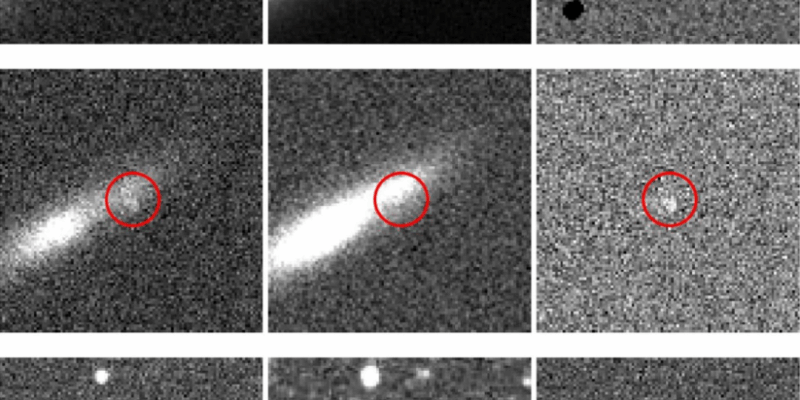
Awe-inspiring supernovae, the explosive ends of stars, are amongst the most insightful and illuminating events in the universe’s vast expanse. These cosmic spectacles light up the sky while simultaneously offering crucial insights into the life cycle of stars and the sprawling universe’s expansion. Nevertheless, identifying them in real time is certainly no walk in the park.
Consider the elusive nature of supernovae – they are rare, ephemeral; they burst onto the scene out of the blue and fade just as swiftly, making the task of tracking their progress rather elusive. Traditional detection methods hinge predominantly on massive datasets and the painstaking manual classification undertaken by astronomers, a process that is notoriously time-consuming and often yields inefficient outcomes. Given that telescopes are capturing millions of snapshots, the automation of this process is more vital than ever.
Meet Gemini: A Groundbreaking AI Solution
Enter the researchers at Google who have embraced the challenge and charted an unconventional path – employing machine learning to teach AI to spot these stellar outbursts. Their method, known as few-shot learning, empowers the model ‘Gemini’ to spot supernovae with just a smattering of instances. This means that instead of being spoon-fed thousands of labelled images, Gemini acquires knowledge from a small dataset and extrapolates this learning to detect new, unseen events.
So how does few-shot learning operate? Well, it essentially echoes human learning patterns. Consider this, we don’t have to encounter hundreds of dogs to identify one. Gemini leverages this concept to scrutinize astronomical images and pinpoint potential supernovae. After training on a modest pool of labelled examples, it can rapidly adapt and identify analogous patterns in fresh data.
A New Era for Astronomy and Beyond
This futuristic technology promises to revolutionize the realm of astronomy. It not only presents a more efficient and precise detection method, enabling scientists to respond to supernovae as they happen, but it also facilitates in-depth analysis of their properties and origins. This significantly enhances the likelihood of uncovering other transient phenomena that might otherwise slip under the radar.
But the applications of this revolutionary technology extend well beyond supernovae. Similar principles can be applied across a wide array of scientific domains where there’s a dearth of labeled data, ranging from medical imaging to environmental monitoring. Indeed, few-shot learning offers a potent means of deriving insight from restricted information.
At a broader level, Gemini serves as a substantial stride forward in deploying AI for scientific exploration. By equipping machines to learn from a mere handful of examples, researchers are not just augmenting our conception of the universe, but are also paving the path for more intelligent, adaptive AI mechanisms.
To dig deeper into this exciting discovery, have a look at Google’s Research Blog: Teaching Gemini to Spot Exploding Stars with Just a Few Examples


