

 By
By The Journey of Julia: From MIT Emails to Global Impact
Back in 2009, a handful of vexed emails exchanged amongst a group of researchers turned a page in the world of scientific computing. The frustrations mainly revolved around the limitations of the existing programming languages – they were completely unfriendly to the typical user and wildly inefficient for those reaching for the stars with research involving intricate mathematical operations and simulations. It seemed the current languages available were somewhat lethargic and inflexible, leaving researchers in the lurch and compelled to rewrite their already successful projects in an entirely different language simply to achieve better performance.
The Birth of Julia and Overcoming Early Obstacles
Driven by these hurdles, a new research project was undertaken at MIT. The aim? To develop a high-performance programming language that was simple to use – the result was Julia. With a unique design purpose for scientific research, complex system modelling and data analysis, Julia took hold as a multifaceted resource for a wide spectrum of applications, stretching from the intricacies of jet engines all the way to fast-paced financial markets.
The roots of Julia were planted within the context of a research project which gradually evolved into a fully-equipped laboratory at the prestigious MIT. This foundation paved the way for what was to become the JuliaHub company. The journey saw Julia acquiring a dedicated fanbase consisting largely of scientists, mathematicians and engineers. In today’s world, Julia is an open-source programming language with no cost attached, boasting more than a million global users including professionals from countless universities and companies.
Julia’s Reach and the Launch of Dyad 3.0
The potential for Julia encompasses a vast expanse with users employing this high-performance tool to model intricate elements ranging from miniscule atoms up to large-scale entities such as neural networks, black holes, race cars and even semiconductors. Julia’s distinct edge lies in its innovative approach of “just-in-time compilation,” a technique which supports a more flexible and speedy code execution when stacked up against other programming languages deployed for numerical work.
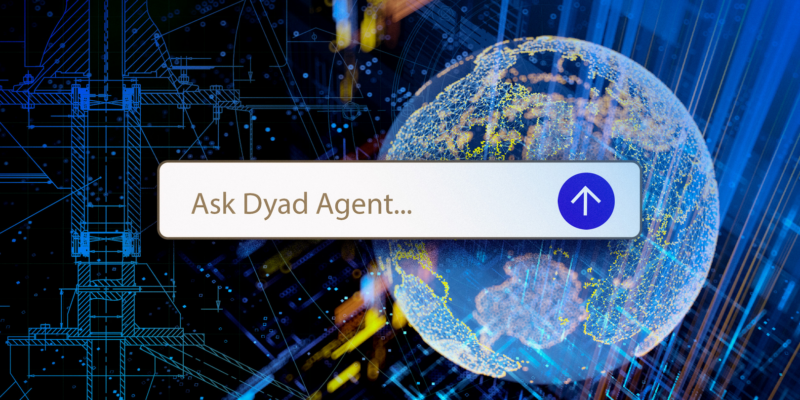
Recently, JuliaHub introduced Dyad 3.0, the next generation of its AI platform intended to skyrocket the expansion and development of intricate physical systems. This enables engineers to command autonomous AI agents to conduct tasks such as safety analyses, physics simulations and quality controls in a smoother, more efficient manner.
Julia’s journey began with discussions about finding superior programming languages for scientific research. The Julia Lab at MIT envisioned the creation of a high-performing platform for applications relating to science, engineering and mathematics. Prior to Julia, scientists were resorting to either recruiting programmers to meet their needs, or more reluctantly, dealing with slow-performing languages.
Continued Impact and Future Innovations
Ever since its public introduction to the world in 2012, Julia has turned heads, attracting a diverse and global audience due to its abstraction capabilities allowing users to solve an assortment of problems. Countless researchers across the globe have harnessed the power of Julia for various applications – you’ll find it in the world of finance, numerical physics simulations, astronomy and even robotics.
To discover more, you’re welcome to peruse the original news article. And if AI automation solutions for your company are on your radar, be sure to explore the possibilities with implementi.ai and see how it can trigger a revolution in your business processes.


