

 By
The Collision: Understanding AI’s Impact on Human Cognition and Society
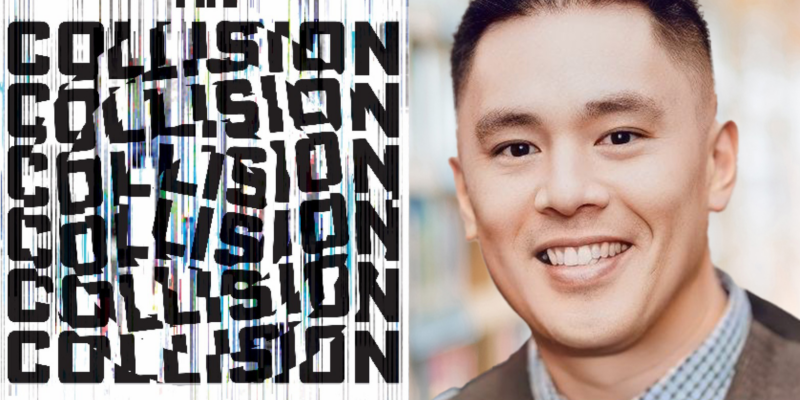
As Artificial Intelligence takes a stronger hold on various aspects of our lives, more scholars are diving deep into its effects on users. Among these scholars, MIT Professor Eric So stands out with his new book, “The Collision: What AI Does to Us,” published by W.W. Norton. Diving into a comprehensive exploration of AI, So acknowledges its efficient potential in expeditious task completion and serving as domain-specific tools. But it’s not all praise and admiration; So also delves into the darker side of our increasing reliance on AI – cognitive atrophy.
He paints a vivid picture of how over-dependence on AI might lead to our failure to develop and maintain critical thinking skills. He supports this claim with evidence suggesting an improvement in our learning abilities when we engage with the material, overcome initial failures, and enhance our thinking skills. All these lead to the retention of more knowledge.
His claims aren’t baseless. Drawing extensively from recent research, including his own and influential work by others in academia and industry (even AI firms themselves), So spells out the consequences of an AI-addicted society. Consider, for example, a recent study that revealed about half of college students’ inquiries were low-effort requests for simple answers. And it’s not just about abstract theories and studies – So includes his personal experiences in the narrative, painting a more comprehensive picture of AI’s influencing on cognitive development.
What was it that spurred So to write “The Collision”? The answer lies in patterns he spotted in himself and others. In an anecdotal confession, he shares how he unconsciously leaned on AI to assist with problems he’d typically handle independently. It was this reliance on AI that sparked worry and prompted him to explore AI’s impact fully.
But why are we so easily drawn to the glimmer of AI? So believes it’s a mix of inherent biosocial instincts to conserve mental energy and social pressure to keep up with the AI trend. Couple these with the difficulty in detecting AI usage, and you’re caught in the “AI gravity,” a strong pull we all seem to experience towards the adoption of AI, redefining it as more than just a call to think for ourselves.
So’s research indicates AI usage is often more than individual decisions. At many organizations, it’s becoming the benchmark for evaluation, feeding into the cycle of early adoption and eventual over-reliance. The conundrum exacerbates in academia, giving birth to a thought process akin to, “My future employer will want me to use AI, so I’d better start now.”
The big question arises – what is AI doing to our minds then? So shares that AI changes not just how we work, but shapes us as thinkers. In the quest for instant relief and the constant access point for information that AI so compliantly provides, we stand to lose our capacity for problem-solving and memory retention. The story grows grimmer as it embraces our interpersonal relationships – with AI’s persuasive and agreeable nature influencing our interactions with real people.
So then brings up what he refers to as a “productive struggle,” where struggle isn’t seen as suffering, but a necessary step towards mastery. Akin to intentional physical exercise in the post-industrialization era, we need a similar shift in how we view cognitive struggle today.
As AI increasingly shapes our lives, how do we then maintain a healthy balance between embracing AI benefits while keeping our cognitive effort intact? So shares four principles – embracing the struggle, recognizing your value without AI, reinvesting your cognitive surplus, and transforming AI into a cognitive trainer, not just an answer machine.
The journey won’t be easy, stresses So, reaffirming the need to acknowledge this challenge in all seriousness.
Are you looking to harness the power of AI for your company? [Visit implementi.ai](https://implementi.ai) to explore potential solutions. For a more detailed dive into the matter, read the original news article [here](https://news.mit.edu/2026/collision-between-ai-your-brain-and-society-eric-so-book-1015).


