

 By
Reimagining Everyday Objects as Self-Aware Devices
A touch of Disney magic is moving its way from animation fantasy into our real-world reality, all thanks to the innovative efforts of researchers at MIT’s Computer Science and Artificial Intelligence Laboratory (CSAIL). The idea of our everyday objects coming to life, much like the lovable characters such as Lumiere in ‘Beauty and the Beast’ or Cogsworth in ‘Alice in Wonderland’, isn’t so far fetched anymore, as CSAIL works to make inanimate objects into responsive and intuitive tools. These objects are designed to interact with human movement in a way that can only be described as magical.
Untapping a New Dimension with 3D Printing
In this new reality, items aren’t just static. Researchers have found ways to 3D print dynamic items with built-in sensing capabilities. They’ve managed to weave sensors, similar to wires, into these objects, by using conductive materials. Previously, the signal interference – akin to the cacophony from tuning into two radio stations at once – often led to technical hiccups. However, this challenge has been tackled, paving the way for devices like robotic gloves to interpret user movements with accuracy.
Here’s where the innovative “X-Hinges” software enters the scene. It’s a collaboration between CSAIL and Tianjin University (TJU), and it allows designers to embed two separate materials into their design. One material is used for sending strong signals, while the other serves as non-interfering elements, like wires. This might sound simple, but it’s a game-changer. It opens up avenues for the creation of responsive objects like small robots, home decor pieces, object-detection systems, and interactive toys.
A Leap into Dynamic Interactivity
But the X-Hinges software doesn’t stop there. It allows users to not only design items but also determine the movement of parts. It’s a level up from previous methods that allowed motion only on a single axis. Now users can program movement on up to three axes. Imagine creating a robotic hand, where you can program its fingertips to move both up-down and side to side! This adaptability facilitates more dynamic interactions between humans and devices.
According to Jiaji Li, an MIT postdoc and CSAIL researcher, it’s like adding a “conscious element” to everyday objects. These intelligent objects can now better understand and respond to how they are being used, learning from interactions much like how AI agents make decisions based on algorithms and inputs. This breakthrough opens up a world of possibilities ranging from intelligent factory robots to smart home gadgets.
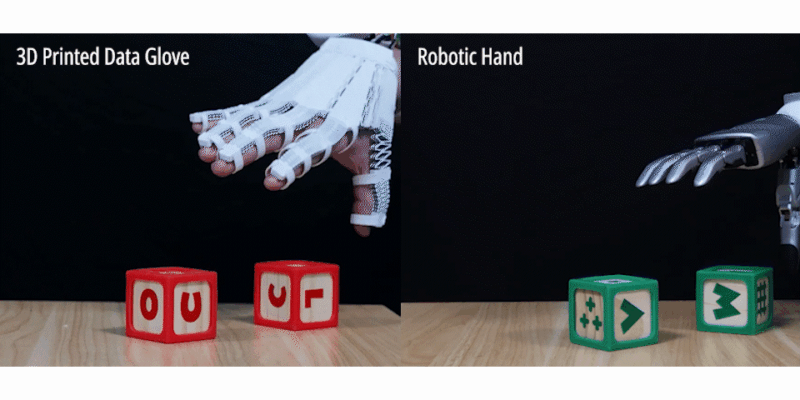
The intriguing exploits of the X-Hinges technology don’t end here either. It has been used to create a robotic glove that adjusts to the wearer’s hand size and communicates movement data to a humanoid hand. It has been utilised to build a device that identifies objects merely by tactile data. Even a simple lamp has been reimagined to adjust its brightness when pinched – closely bridging the gap between the digital and the physical world.
A Bright Future Ahead Despite Challenges
However, like any new technology, X-Hinges does face some challenges. Calibration issues exist due to variations in electrical layouts during 3D printing, which could mean no two identical devices would produce the same reading. But ever resourceful, the researchers have developed a computer vision system to recalibrate outputs, ensuring consistent data across devices.
Looking ahead, Li’s ambitions are lofty. He sees a future where actuation and sensing are directly integrated into the objects during the 3D-printing process. This would usher in a new era of AI-driven items, moving us ever closer to a world where everyday items are self-aware, just like in our favourite Disney classics.
You can learn more about this exciting development here. If you’re interested in exploring how AI automation can revolutionize your business processes, then do visit implementi.ai.


