

 By
By Blending AI with Physics: Bringing Creative Designs to Life
Imagine dreaming up a dazzling design that looks perfect on paper, but when it comes time to make it a reality, it simply doesn’t hold up. Sounds frustrating? It’s a common challenge in the world of generative artificial intelligence (genAI) models, especially when it comes to crafting items like decor or personal accessories. These AI tools can certainly generate impressive 3D designs, but they trip up when it’s time to make these creations practical for everyday use.
Grasping the crux of the problem
The real headache lies in the gap between design and physics. AI tools, like Microsoft’s TRELLIS, may sketch out a stunning 3D chair using prompts or images, but when that chair is put to the test under real conditions, things might come apart – literally. The AI simply can’t comprehend the physical entity it’s creating.
A brand-new solution: Meet PhysiOpt
Thankfully, a solution is at hand. A team of clever scientists over at MIT’s Computer Science and Artificial Intelligence Laboratory (CSAIL) have concocted an intuitive system named “PhysiOpt.” This system is designed to inject physics simulations into generative AI, ensuring that a 3D model of a key holder or a coffee mug won’t just look pretty, but will stand up to everyday use. PhysiOpt tinkers and tweaks the construction of the design subtly, maintaining the artistic vision while securing the piece’s functionality.
Creating with PhysiOpt is a breeze. Users can simply type a description or upload an image, then roughly half a minute later, a feasible 3D model is ready for production. The CSAIL researchers showcased PhysiOpt’s powerful performance by creating a “flamingo-shaped glass for drinking” – and yes, it was as charming and functional as it sounds.
The true genius of PhysiOpt lies in its synthesis of GenAI and physically-based shape optimization. Xiao Sean Zhan, an MIT EECS PhD student and CSAIL researcher, explains that PhysiOpt “helps virtually anyone generate the designs they want for unique accessories and decorations.” The system lets users craft shapes ready for manufacturing, and it can make iterative design changes without extra training.
But design is just the beginning. Users can also determine the force or weight their creations should handle, allowing the object to be prepared for real-world use. You can choose materials and support methods, and the system will utilize a physics simulation known as finite element analysis to put the design through its paces. This provides a heat map to identify any weak spots in the structure.
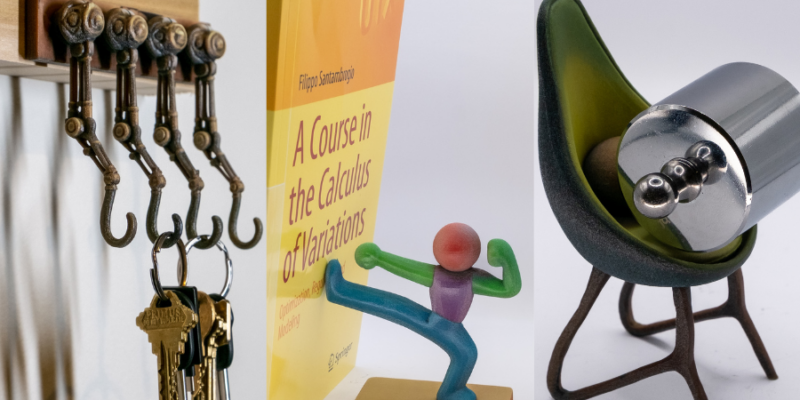
The system’s versatility and efficiency truly set it apart. PhysiOpt demonstrated its prowess by crafting a ‘steampunk keyholder’ and a ‘giraffe table’. Thanks to a pre-trained model acquainted with thousands of shapes, the system doesn’t require ample training. This allows PhysiOpt to craft 3D models quickly, outpacing methods like DiffIPC.
A peek into the future
With PhysiOpt, the gap between raw creativity and tangible items is closing. In the coming years, it might even predict constraints like loads and boundaries, further smoothing out the design process. The research team is keen to improve PhysiOpt’s capacity to understand physics and to remove any unusual artifacts from the 3D models. Who knows? Maybe your unique coffee mug design idea could become a reality sooner than you think!
The world of AI is constantly changing, and we’re thrilled to follow along. We’d like to extend our gratitude to the MIT-IBM Watson AI Laboratory and the Wistron Corp for supporting this important research. And if you’re hungry for more details, feel free to check out the original article.


