

 By
By Breaking Boundaries: How MIT’s IDSS is Redefining Multidisciplinary Research
Blurring Boundaries in Academia: The Push for Interdisciplinary Collaboration
The line separating academic fields is growing fuzzier every year—and that’s not a bad thing. As our world grapples with daunting problems like climate change, misinformation, and navigating new frontiers in artificial intelligence, the need for experts who can look beyond their traditional silos has never been greater. Tackling issues of this scale doesn’t just call for teamwork across departments; it demands true collaboration between academia, industry, and government.
At MIT, Professor Munther Dahleh saw these needs years ago. Back then, interdisciplinary efforts were often limited to quick, temporary projects that came and went. Instead, Dahleh wanted something lasting: a foundation where researchers from different domains would work together on the world’s most pressing problems for the long haul. This goal sparked the creation of the MIT Institute for Data, Systems, and Society (IDSS), which Dahleh helped establish over a decade ago.
A New Vision for Research
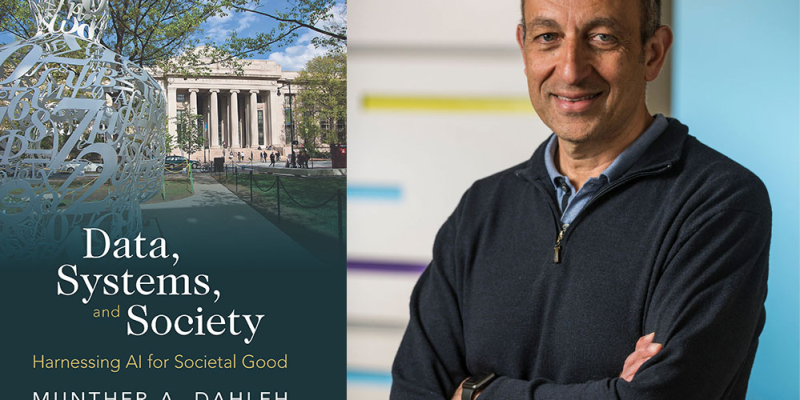
Dahleh’s vision, the story behind IDSS, and its wider lessons for future researchers all come together in his latest book, “Data, Systems, and Society: Harnessing AI for Societal Good”. Within its pages, he details the challenges of breaking down the rigid walls separating academic fields and lays out a blueprint for doing things differently—inviting both newcomers and veterans in data science and AI to do the same.
Central to IDSS’s approach is what Dahleh calls “the triangle” model. Picture three corners: one represents the physical world, another is human behavior, and the third is policy and governance. Connecting them all are streams of data, acting as the glue. The idea behind this model is simple but profound: any real-world issue is shaped by how people interact with systems and the rules that guide them, and data helps us see the whole picture—including unexpected social consequences.
Nothing underscored the need for this kind of thinking like the COVID-19 pandemic. The crisis exposed, in real time, how little concrete data existed, how unpredictably people can behave, and how policy decisions sometimes missed (or misunderstood) the mark. For Dahleh, these challenges validated the IDSS philosophy: solving truly complex problems requires input from multiple, deeply connected disciplines, not just a collection of experts working alone.
Building an Academic Home for Collaboration
Dahleh’s triangle isn’t limited to health emergencies. The explosion of social media and e-commerce—for better and for worse—relies on layers of human interaction, regulation, and oceans of data. Issues such as fake news or platform design can’t be tackled with a single lens; they require layered, collaborative responses.
This complexity extends to ethical debates around new technologies like self-driving cars. As Dahleh points out, choices made by engineers and designers aren’t just technical—they ripple into society in unpredictable ways. His book takes care to distinguish true interdisciplinary work from efforts that are only “multi” or “cross” disciplinary, noting that genuine impact comes from building lasting, integrated communities, not one-off ventures.
At MIT, Dahleh found that making this kind of collaboration permanent wasn’t easy. It required creating a new institute with its own community, publications, and curriculum—something only possible because of determined vision and sustained support. Through programs like the IDSS doctoral track, students dive into complex problems from multiple vantage points, learning that societal challenges are rarely one-dimensional.
A couple years after handing over leadership of IDSS, Dahleh realized there was no official record of how the institute came to be—no guidebook for others hoping to tackle the same journey. His new publication aims to fill that gap, offering not just a history but also inspiration for anyone ready to break down academic barriers. Dahleh’s message is clear: the world’s most pressing problems won’t wait for academia to catch up, and working together is our best hope for meaningful solutions.


