

 By
By Coactive Is Helping Businesses Unlock the Power of Visual Data with AI
It’s easy to forget just how much of the data businesses generate—be it images, videos, or audio recordings—never gets properly seen or understood. While most companies have become skilled at interpreting the info tucked into spreadsheets and databases, what about that ocean of messy, unstructured visual material? Most of it just sits unseen, hiding valuable insights.
Coactive aims to change that. Founded by MIT grads Cody Coleman and William Gaviria Rojas, Coactive’s technology is built around a simple but powerful idea: give businesses the tools to actually “see” inside their ever-growing trove of images, videos, and audio files.
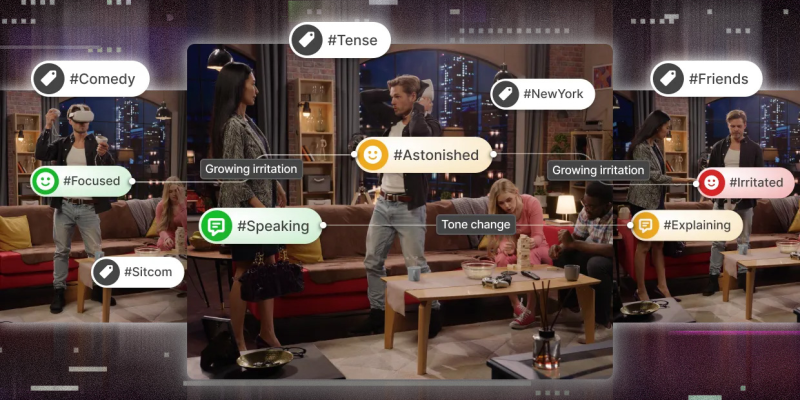
Instead of relying on clunky spreadsheets or endless rows of manually assigned tags, Coactive uses artificial intelligence to quickly analyze and organize visual content. The effect? Media and retail companies have started using Coactive’s platform to serve up the right videos or images to users, filter out anything inappropriate, and even discover how their content is actually influencing people—without making employees slog through tedious manual tagging.
What makes Coactive interesting is its philosophy of teamwork between humans and machines. “Coactive” is a nod to the vision that AI isn’t here to replace people, but to work with them—offering new abilities to interpret and act on information that otherwise would be lost.
The company’s roots go deep, with Coleman and Gaviria Rojas first crossing paths as MIT students. They later reconnected in Silicon Valley and combined their experience in AI and data science to address the mounting challenge of visual data.
Their result is a flexible platform that evolves alongside new AI models. Users can search their enormous libraries of images, videos, and even audio by describing what they want in natural language or by example. The platform automatically generates detailed tags and lets companies run sophisticated analytics—helping them to finally understand what’s actually hiding in their content.
Some big names already trust the tech. Reuters, with its massive archive of photos, now uses Coactive to instantly pull up relevant images—transforming how journalists work. On another front, entertainment website Fandom leverages Coactive’s speedy moderation to catch and manage user-uploaded images that break community rules, doing so in milliseconds.
But the ambitions at Coactive go a step further. The founders see a future where, instead of people learning to use computers, the machines are the ones learning to understand us—our words and our images, just how we naturally communicate. As Coleman puts it, “That changes everything.”
For a world where visual content is becoming the dominant language of the internet, platforms like Coactive aren’t just nice to have—they’re quickly becoming essential for any business wanting to keep up.


