

 Unter
Unter RealSense bringt 3D-Vision-Technologie für intelligentere Roboter und Drohnen voran
RealSense Steps Out: A New Chapter for 3D Vision
If you’ve followed the evolution of machine vision, you’ve probably heard of RealSense—the company that, until recently, was sheltered under Intel’s wing. Today, RealSense is charting its own path as a newly independent company, and this move isn’t just industry news—it’s a big moment for anyone interested in smarter, more intuitive machines.
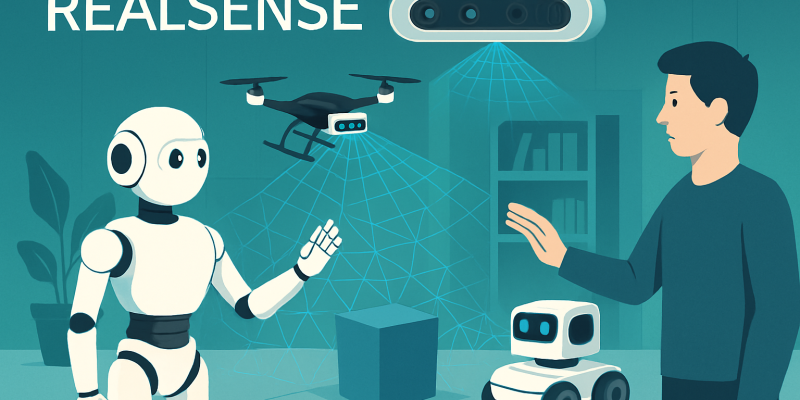
Freed from the intricacies of a corporate giant, RealSense is now in a position to focus all its energy on what it does best: giving machines real depth perception. We’re talking about technology that lets robots and other devices not just see the world, but actually understand it spatially, nearly as we do. Instead of settling for flat, two-dimensional images, RealSense cameras bring a rich, 3D map of the environment into play, opening the door for drones, robots, and even medical devices to act and react with much greater intelligence.
A Leap Forward in Robotics, Security, and Beyond
The reach of RealSense’s technology spans far more than high-end robotics. Think about self-navigating delivery drones weaving through chaotic cityscapes, or robotic arms in factories handling fragile assemblies with far fewer mishaps. Healthcare devices could use this precise vision to make surgery and diagnostics safer, and augmented reality developers now have a sharper set of tools for layering virtual content with real depth and accuracy. Even security systems stand to benefit, with facial recognition and access control becoming smarter and more reliable.
With RealSense now running the show on its own, the company is wasting no time expanding its influence. A fresh $50 million in new funding has come in from big names, setting the stage not just for new product development, but for world-scale manufacturing and a global presence. The numbers back up their impact: the company says its depth cameras are already found in around 60% of all autonomous mobile robots and humanoids worldwide.
What Changes With Independence?
The main thing that changes is speed. RealSense can now pivot and experiment more rapidly than ever, untethered from Intel’s timeline. This agility means they can more quickly adapt to the fast-evolving world of AI and physical robots, pushing innovations out to customers hungry for next-level perception systems. And while their roots are in California and Israel, RealSense’s reach is truly global, with over 3,000 customers and some 80 patents under their belt.
For anyone with a stake in robotics, automation, or next-gen vision systems, this isn’t just an industry reshuffle—the emergence of an independent RealSense is a signal that the field of 3D machine vision is entering a bold new era. The company is betting that as machines become an even bigger part of our world, giving them the tools to understand that world in three dimensions is going to matter more than ever.
Follow the full story at TechCrunch.


