

 Unter
Unter The Promise and Challenges of Visual AI in Urban Planning
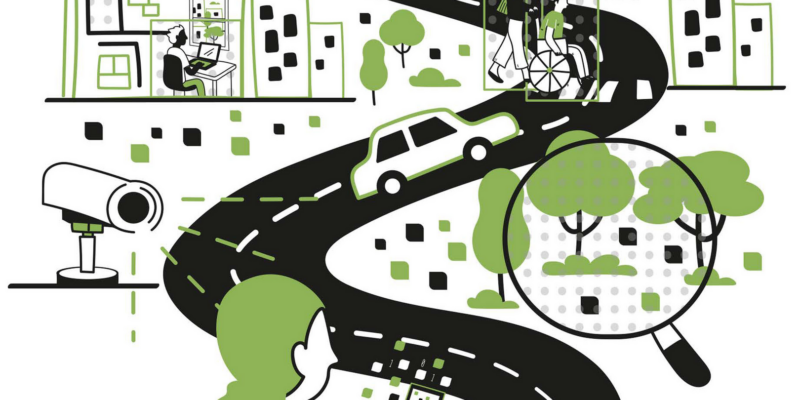
Not entirely long ago, a brilliant study took centre stage in the realm of urban planning. This pioneering study conducted by researchers from the illustrious MIT Senseable City Lab offered a fresh perspective on a chronic urban problem: pollution in New York City. Through the lens of advanced technology and innovative methods, the team leveraged machine learning to estimate emissions from each automobile captured on the city’s 331 traffic cameras. It was a light-bulb moment that illustrated how visual AI techniques can be employed to drive environmental efforts on an unprecedented scale.
Artificial Intelligence and Our Urban Landscape
Visual AI has revolutionized modern-day urban planning. With the power of advanced technology, urban planners can now tackle a wide range of pivotal questions. Where do we most frequently encounter traffic congestion? What makes certain intersections potentially dangerous? Which parts of parks or plazas lure the most people? While it’s clear that the more images we collect, the more insights we can generate, there’s also a need to navigate the shadowy cornerstones of privacy and fairness.
“Each image is a dataset,” said Fábio Duarte, an MIT researcher and co-author of a forward-thinking book on visual AI and urban studies. He paints a clear picture of how digital images can quantify city features with precision and nuance. Yet, Duarte also strikes a cautious note, as he underscores the consequent implications on privacy.
Gazing At The Future Of Urban Planning
The exciting application of visual AI within the urban context doesn’t stop there. Visual AI also grants us scalability like never before. As noted by Martina Mazzarello, another MIT scholar and co-author of the same book, the technology allows us to glean insights on a large scale, across diverse urban settings. Their groundbreaking book, “How AI Sees the City: Urban Visual Intelligence,” explores this and more, as they detail how AI can be a valuable tool for human-driven urban design.
The book, firmly rooted in the work of the MIT Senseable City Lab, embarks on a journey to establish AI’s place within traditional visual urban studies. It connects the dots from ancient Roman marble maps to the influential urban photography of today. The content encourages readers to view AI as a device serving human purposes in urban design – from emissions monitoring and traffic flow analysis to the enhancement of street-level imagery. The authors even tackle green urban spaces, discussing how phone images can offer insights into people’s everyday interaction with greenery and its impact on reported wellness.
Like all powerful tools, visual AI comes with its challenges. The authors highlight potential downfalls such as surveillance issues, bias in AI systems, and unequal evaluation of diverse population groups. This echoes Duarte’s assertion that AI is not neutral and hence it is critical to handle it with care and insight.
“How AI Sees the City”ː a remarkable book that has since garnered praise from peers. Michael Batty of University College London commends the work, highlighting how it showcases the potential of AI and urban analytics in improving urban design.
To sum it up, visual AI boasts incredible promise for urban studies. If approached wisely, critically, and creatively, it can be a game-changer. On a related note, if your company is exploring automation options, do check out what implementi.ai has in store for you.


