

 Unter
Unter {“topic”: “Apple’s Future Under John Ternus: Navigating the AI Era”, “body”: “
Today, I’m talking with Mark Gurman, who is the world’s best-sourced Apple reporter — both as Bloomberg’s chief Apple correspondent and the host of the upcoming podcast Power On. Earlier this month, Apple hosted its annual iPhone hardware event, virtually every detail of which was reported ahead of time by Mark. But this event was special, for a number of reasons.
\n\nJohn Ternus’ First Major Launch
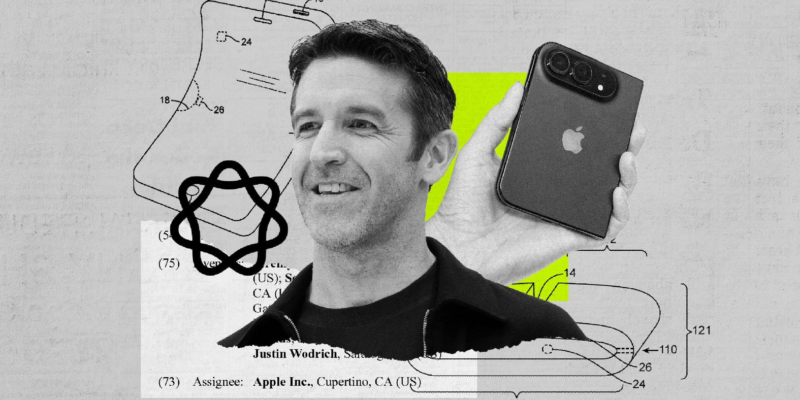
\n\nIt was new Apple CEO John Ternus’ first major product launch since he took over for former CEO Tim Cook less than two weeks prior. It was also the debut of the iPhone Duo, Apple’s first foldable smartphone. The timing of those two things was not at all coincidental, as you’ll hear Mark explain. Apple takes these hardware events — and the stories they tell — extremely seriously.
\n\nA Shift from the iPhone Era to the AI Era
\n\nThis year’s story actually says a great deal about what’s happening at Apple, how Cook managed in wholesale leadership ranks over the past year, and how all of that might change Apple’s culture. Furthermore, what all that tells about Ternus’ plan to navigate Apple from what you might call the iPhone era into the AI era.
\n\nMark Gurman on Apple’s Future
\n\nMark Gurman, you’re the chief Apple correspondent and the managing editor of consumer technology at Bloomberg. Welcome to Decoder.
\n\nGood to be here finally. Thanks for having me. And it’s been a while, so it’s good to catch up on all things Apple.
\n\nDo You Miss Being Surprised?
\n\nDo you ever get nostalgic for a time when you didn’t know what was going to happen at the iPhone event?
\n\nHonestly, I never think about it that way. I’m just fixated on delivering the goods and delivering the news. And people love their Apple. People want to know everything that’s coming down to the last minute, so I’m here to provide it for them.
\n\nApple Community and Its Changes
\n\nThere’s a whole culture around Apple that has grown up and changed over the years, and you can trace it to different eras of hardware, to different CEOs, to different sizes of the company. This was the first event with John Ternus as CEO. Apple announced a big new product in the iPhone Duo.
\n\nDo you sense that the community is changing? How do you think that community has changed over the years? And do you think Ternus is going to lead to a difference in what that community feels like?
\n\nI have to say, this event really didn’t feel much different than a Tim Cook event. They felt pretty interchangeable. It could have been Tim up there introducing it. It could have been Ternus up there introducing it.
\n\nTernus and AI
\n\nThe one thing I will say that did feel slightly different is that Ternus came out swinging with a point of view on AI. The first thing he came out with was about the intelligent personal hub. Now, here’s the big difference between Tim Cook and John Ternus in terms of their management style. You’re inside Apple, you’re an executive, you’ll come to him with an idea, you’ll come to him with a viewpoint, a decision, an opinion, and he’ll just pepper you with more questions. He won’t make a singular decision in many cases. It’s very much communal decision-making, collaborative decision-making.
\n\nJohn Ternus, if you come to him and you want him to make a decision, he’ll make a decision. He’ll have an opinion. Now, you may hate his opinion; you may completely disagree with him, but he has a viewpoint. But that’s the big difference between talking to people about Ternus and Tim.
\n\nTernus comes out talking about his view on AI. I may disagree with it. A lot of people may disagree with it. They may think the OpenAI or Anthropic approach is superior, but at least he came out and had a viewpoint.
\n\nApple’s AI Strategy
\n\nApple’s been at this AI game now for two years since they launched Apple Intelligence at WWDC in 2024, and it’s been a mishmash of things. They haven’t really come out with a very strong narrative and viewpoint, and they finally did. So, as I said, whether you agree with it or not, they did do that. And I thought that was a really interesting way to kick off the keynote.
\n\nAll right, we’re just going to get into the weeds of Apple nerds disagreeing about things.
\n\nThe iPhone Duo and Apple’s Future
\n\nI sat through that event, and I appreciated the same thing that you saw, which is, “Oh, we’re telling a story.” John Ternus is on the stage, and the first thing he’s doing is telling a story about this product and how it fits into the universe of technology. And then I took a beat, and I was like, oh, but they’re also just making sure that he’s successful at his first event by playing Apple’s greatest hits.
\n\nBecause an “intelligent personal hub” is just a replay of Steve Jobs saying the iMac was the digital hub. At the very end of the event, Ternus said, “There’s one more thing, and it’s the iPhone Duo.”
\n\nThere was just a part of all of that that, to me, felt like Apple saying, “Look, our new CEO can put on the clothes of the old CEO. He can do this same dance that you’re expecting.” Underneath it, what I felt was, to your point, that I don’t buy the story about the intelligent hub.
\n\nAI and Apple’s Strategy
\n\nNo, I don’t buy it either.
\n\nBecause any of the things we’re seeing AI do are happening in cloud services. It’s the same week that Meta launched Muse, right?
\n\nYou can feel what you want about Meta launching Muse, but Mark Zuckerberg is giving everybody 8GB of storage and 8GB of RAM in the cloud, and Muse can go do a lot of things that AI on the iPhone absolutely cannot do at this point in time.
\n\nI just felt like there was a part where they were playing it really safe with John by having him basically show up and be the new lead singer of Journey. You can’t get it wrong if you’re going to do “Lights.” If you’re going to show up on stage and do “Don’t Stop Believin’,” you’re going to be fine for a minute. And it’s all the stuff that comes after that’s going to really show his real personality. But it sounds like you thought that that’s his point of view.
\n\nApple’s Storytelling
\n\nWell, it’s a couple of things. At a very high level, Apple’s going to tell a story around what they have. If Apple invented ChatGPT, they would’ve invented ChatGPT, and they would’ve told a good story around that. Apple has gone as far as it’s able to, at least for now, on AI. So it’s telling the story, the best version of that story that they can with what they have to work with, with the bird they have in hand. So that’s the one thing.
\n\nI agree with you on the intelligent personal hub, and how that compares to the iMac back in ’98. And it feels like they’re trying to sell this pivot from the Mac as the center of everything with the peripherals around it; then you got to iCloud in 2011, the center of everything with the peripherals around it. Now, it’s this Intelligence right at the center with everything around it.
\n\nBut what’s so fascinating is that Apple held a major product launch event in September of the year 2026 and did not introduce a single notable new AI feature. The first 15 minutes or so of the keynote was simply a replay, a re-narrativization of what they introduced over the past two years with Apple Intelligence. And so they tried to just tell that story in a more concrete way.
\n\nSchlussfolgerung
\n\nThe other thing is they don’t have any AI devices at the very core, and so they need to prop up the iPhone as their AI device because they don’t have an alternative. But of course they’re only going to do that until they have that killer device, and then they’re going to change that whole narrative.
\n\nSo it’s a very narrative PR and marketing-driven company. And I’m not saying that to be critical. I mean, if I ran the company, obviously I’m going to tout what I have. I’m not going to veer from that. But it is interesting how they’re playing this
Today, a lively chat with Mark Gurman, acclaimed Apple reporter and Bloomberg’s principal correspondent, sheds light on Apple’s interesting trajectory under its new CEO, John Ternus. After a decade or so defining the ‘iPhone era’, Apple looks set to shift gears and navigate down the intriguing pathway of the Artificial Intelligence (AI) era.
John Ternus took the reins as CEO, succeeding Tim Cook, just as Apple was preparing to host its annual iPhone hardware event. This year’s event stood out for more than one reason. For starters, it marked Ternus’s inaugural product launch – the unveiling of the iPhone Duo, the first-ever foldable smartphone from Apple. Coincidentally, or perhaps not, this was also right after Ternus took over the CEO post.
Observers heard from Gurman that Apple was staking a lot on these high-profile hardware events, not only for the gadgets themselves but for the narratives and signals they send out to the world. For instance, Gurman argues that the company’s evolution from the iPhone-dominated era to the new AI era reflects a nuanced shift in Apple’s internal culture and leadership style.
Gurvman’s extensive knowledge of Apple stems from his role as Bloomberg’s chief correspondent where he constantly offers insightful input on the company’s futures and decisions. A discussion around the new management style under Ternus gives an insight into what may change and what may likely remain the same.
According to Gurman, there was little to differentiate Ternus’s first event from how Tim Cook might have hosted it. Both executives seemed perfectly suited for the task. However, Gurman acknowledges that Ternus struck out boldly with his strong emphasis on AI, something which stood out in his maiden address.
Beyond his opinions about AI, an intriguing trait that separates Ternus from his predecessor emerged during an analysis of his leadership style. Gurman suggested that Ternus, unlike Cook, was not averse to making unilateral decisions if situations demanded them.
This stance was evident during Ternus’s speech about AI, a subject, Gurman admitted, he did not entirely see eye to eye with the CEO on. Nonetheless, Gurman applauded the fact that Ternus did not shy away from stating his perspective, even if it risked conflicting with popular opinions.
While musing on Apple’s AI strategy, Gurman reflected on the strange cocktail of achievements and shortfalls since the introduction of Apple Intelligence at WWDC two years ago. The story of Apple’s tryst with AI finally found a coherent narrative at the recent event. Regardless of the degree of consensus on the narrative, Gurman found it commendable that Apple had taken a stance and presented it cogently.
When the iPhone Duo was unveiled during the event, both Gurman and I couldn’t help but appreciate Apple’s knack for spinning a yarn about its products, drawing the audience into its tech universe. However, both of us were slightly sceptical about the juxtaposition of an “intelligent personal hub” against the backdrop of AI’s wide-scale use in cloud services.
Despite this, Gurman noted that Apple was adept at crafting the best stories possible around whatever product or concept it had at its disposal. That said, the absence of any new, noteworthy AI feature during the grand iPhone event in 2026 seemed peculiar. We agreed that despite Ternus’s firm assertions on AI, the iPhone, as it is, might not be the ideal AI device.
Wrapping up the conversation, Gurman suggests that Apple continues to extol what it already has while subtly steering the narrative in the direction they wish to head in the future. In the case of AI, Apple is laying the groundwork for its course until it introduces a game-changing device, after which it will likely pivot the narrative. It’s a crafty strategy, he adds, that speaks to Apple’s highly narrative-driven modus operandi.


