

 Unter
Unter Antrieb der Zukunft: GMs Vorstoß für erschwingliche, leistungsstarke EV-Batterien
Die Energiewende durch Innovationen im Bereich der Batterietechnologie
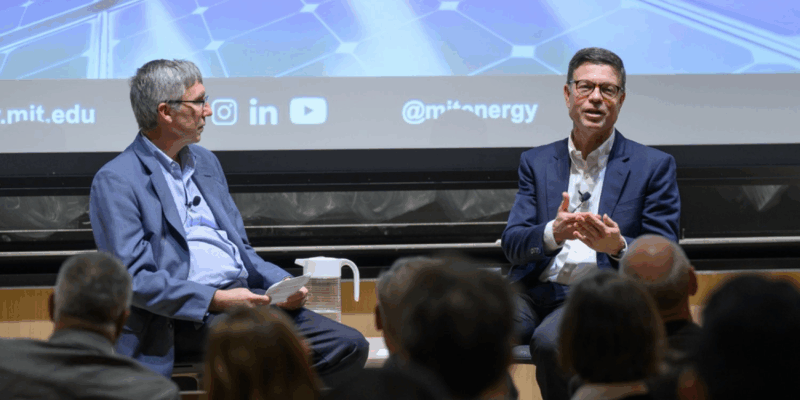
Die Zukunft der Mobilitäts- und Energieinfrastruktur verändert sich rasant – und das alles dank der Fortschritte im Bereich der Batterietechnologie. Während des Herbstkolloquiums der MIT Energy Initiative (MITEI) gab Kurt Kelty, der bei General Motors (GM) für die Bereiche Batterien, Antriebe und Nachhaltigkeit verantwortlich ist, einige spannende Einblicke. Er ging ausführlich auf die laufenden Bemühungen von GM ein, vielbeachtete Batterietechnologien der nächsten Generation aus der Forschung in die kommerzielle Anwendung zu überführen. Kelty’s Vortrag war ein zentraler Bestandteil der Vortragsreihe „MITEI Presents: Advancing the Energy Transition“.
Der Weg zu fortschrittlichen Batterien: Wichtige Ziele und bahnbrechende Technologien
Was treibt die Innovationsstrategie von GM im Bereich Batterien an? Drei wesentliche Aspekte bilden die Grundlage ihres Ansatzes: Erschwinglichkeit, Leistung und die Lokalisierung der Lieferkette. Wie Kelty betonte, stellen die hohen Kosten für Batterien ein erhebliches Hindernis für die breite Einführung von Elektrofahrzeugen (EV) dar. Konkret machen Batterien etwa ein Drittel der Gesamtkosten eines Elektrofahrzeugs aus. “Wie lassen sich die Kosten senken? Es sind die Batterien”, erklärte er den Teilnehmern des Kolloquiums.
Doch die Kosten sind nicht das einzige Problem. GM unternimmt zudem erhebliche Anstrengungen, um die Batterieleistung zu steigern, wobei der Schwerpunkt vor allem auf Aspekten wie Ladegeschwindigkeit und Energiedichte liegt. Darüber hinaus ist die Lokalisierung der Lieferkette ein drittes, entscheidendes Element. Kelty erklärt: “Wir müssen hier in Nordamerika unsere Widerstandsfähigkeit und unsere Unabhängigkeit stärken, damit wir nicht auf Materialien aus China angewiesen sind.”
Von den verschiedenen Strategien, die zur Beschleunigung dieses Innovationsprozesses verfolgt werden, stechen zwei besonders hervor. GM investiert massiv in Virtualisierungs- und KI-Technologien. Diese Techniken ermöglichen einen optimierten Ansatz zur Modellierung und Simulation der Batterieleistung, noch bevor physische Prototypen gebaut werden. Kelty veranschaulicht diesen Ansatz: “Wenn man den Nickelgehalt auch nur geringfügig verändern möchte, können wir sehr schnell modellieren: ‘Okay, wie wirkt sich das auf die Energiedichte aus? Auf die Sicherheit? Auf die Ladefähigkeit?’” Dank dieser Technologie konnte die Testphase drastisch von Monaten auf lediglich wenige Tage verkürzt werden.
Einsatz neuartiger Technologien, Erweiterung der Möglichkeiten
Eine wichtige Entwicklung, an der GM arbeitet, ist der Einsatz von lithium-manganreichen (LMR) Batterien. Diese Batterien weisen im Vergleich zu den in US-Elektrofahrzeugen häufig verwendeten Batterien mit hohem Nickelanteil einen geringeren Nickelgehalt und einen höheren Mangangehalt auf. Das Ergebnis? Eine kostengünstige Batterie, die keine Kompromisse bei der Reichweite eingeht. Kelty unterstreicht diesen Punkt: “Das ist wirklich ein Durchbruch. LMR-Batterien bieten ein Leistungsniveau, das dem von Batterien mit hohem Nickelanteil ähnelt, liegen aber kostenseitig näher an Lithium-Eisen-Phosphat-Batterien (LFP).” LFP-Batterien sind aufgrund ihrer Kosteneffizienz und hohen Sicherheit auf dem chinesischen Markt beliebt. GM hat ehrgeizige Pläne, als erster Automobilhersteller LMR-Batterien auf den Markt zu bringen – voraussichtlich im Jahr 2028.
Doch die Batterieinnovationen von GM beschränken sich nicht nur auf Fahrzeuge. Das Unternehmen nutzt seine Kompetenzen für die Energiespeicherung im Netzmaßstab – ein Bereich, der ein starkes Wachstum verzeichnet, insbesondere aufgrund der steigenden Nachfrage von Rechenzentren. Kelty betonte diesen Punkt: “Es ist bereits jetzt ein großer Markt, der zudem sehr schnell wächst.” Darüber hinaus prüft GM, wie Elektrofahrzeug-Batterien zum gesamten Energieökosystem beitragen können. Dabei stehen Vehicle-to-Grid-Technologien (V2G) ganz oben auf der Liste. V2G ermöglicht es Elektrofahrzeugen, Strom sowohl aufzunehmen als auch ins Netz zurückzuspeisen, was potenzielle wirtschaftliche Vorteile und Vorteile für die Netzstabilität bietet.
Grenzen verschieben und den Weg in die Zukunft ebnen
Kelty blickt angesichts der Kombination aus kontinuierlicher Innovation, gesteigerten Fertigungskapazitäten und der Lokalisierung der Lieferkette weiterhin hoffnungsvoll in die Zukunft der Batterietechnologie und -fertigung in den Vereinigten Staaten. Mit seinen Worten: “Wir verfügen hier über die Technologie, um dies zu verwirklichen. Die Innovationskraft war hier schon immer vorhanden. Jetzt verlagert sich auch die Fertigung immer mehr hierher”, sagte er. Kelty ist überzeugt, dass die Vereinigten Staaten auf dem besten Weg sind, weltweit eine führende Rolle in der Batterieproduktion einzunehmen.
Hier können Sie sich über dieses sich rasch entwickelnde Fachgebiet und bevorstehende Veranstaltungen auf dem Laufenden halten: Die Veranstaltungsseite des MITEI. Den Originalartikel finden hier.


