

 By
By How MIT Entrepreneurs Are Navigating the AI Revolution
The Martin Trust Center for MIT Entrepreneurship has long established itself as a crucible for kindling innovative ideas and imparting crucial startup building skills to students. However, in recent times, the spotlight has turned on one power player that’s been making waves in the entrepreneurial landscape: artificial intelligence.
However, inspite of the tech world forecasting AI to completely alter startup building, the Trust Center proposes a more grounded approach. Entrepreneur in residence at the center, Macauley Kenney insists that the fundamentals of entrepreneurship are still intact. “Indeed, there’s a shift in how certain tasks are accomplished now, but AI is more like another wrench in the toolbox. But it in no way replaces the need for a deep comprehension of your customer base or the necessity to validate your ideas,” elucidates Kenney.
Incorporation and Utilization of AI
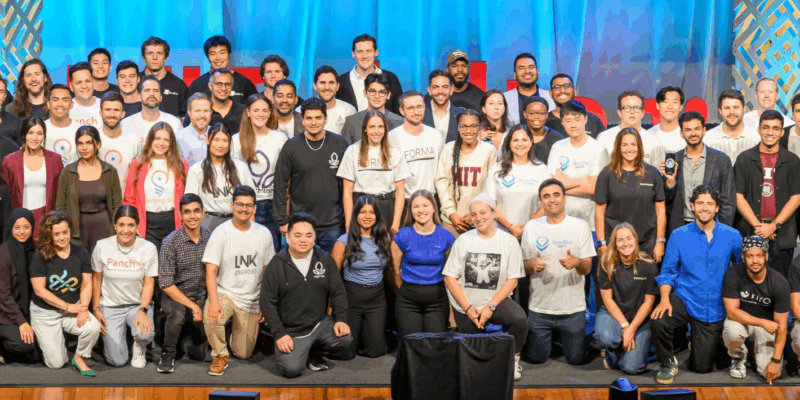
During the recent delta v startup accelerator program, the balance between AI usage and human touch was even more evident. While students extensively used AI tools to speed up coding, draft presentations, explore industries, and brainstorm potential ideas, the most significant decisions were made after directly interacting with the customers.
The Trust Center’s internal acceptance of AI is also worth noting; a good instance being Jetpack, a generative AI app integrated into the center’s Orbit platform that guides users through the 24 steps of disciplined entrepreneurship based on Managing Director Bill Aulet’s book. However, Kenney asserts that while AI can aid in faster movement, steering the direction depends wholly on the user.
AI Understanding and Adoption
Delta v program staff annually ponder how to best integrate AI into the program. The objective is to aid students in leveraging the strengths of the technology whilst being aware of its limitations. Meanwhile, startups like Mendhai Health utilize AI and telehealth to provide personalized physical therapy for women with pelvic floor dysfunction, emphasizing the need for customer understanding and warning against over-reliance on AI.
Some delta v teams, like MBA candidate Murtaza Jameel’s company Cognify, have even infused AI into the heart of their business operation. Describing his company as AI-native, Jameel explains that Cognify uses AI to simulate user behavior on websites and apps, thereby helping teams refine digital experiences without resorting to old-style product testing.
AI and the Human Element
Juxtaposing this rapid adoption of AI, the Trust Center continues to underscore the elementary principles of entrepreneurship, especially customer discovery. Even though AI can hasten the process, it cannot identify your customer or their needs. Entrepreneur in Residence Ben Soltoff, insists, “That’s something you still have to go out and learn firsthand.”
Lastly, the Trust Center is gearing up to adapt and integrate AI extensively into its curriculum as the technology continues to evolve. “I came to MIT to start a tech company,” reminisces Jameel, “Delta v provided me access to networks, mentors, and advisors – individuals who’ve traversed this journey before. That aspect of the program is what makes it truly special.”
For more in-depth information on how MIT entrepreneurs are leveraging AI, explore the original article at MIT News.


