

 By
By MIT and Mass General Brigham Launch Collaborative Seed Program to Transform Health Innovation
MIT and Mass General Brigham (MGB), two leading names in science and medicine, have just kicked off the ambitious MIT-MGB Seed Program—an effort designed to bridge the divide between groundbreaking science and real-world healthcare. The financial spark for this collaboration comes from Analog Devices Inc. (ADI), whose donation sets the stage for pushing forward cutting-edge research with meaningful clinical impact.
Fast-Track for Healthcare Innovation
This Seed Program is all about teaming up MIT’s engineering might with MGB’s deep clinical expertise. The idea is to bring together mixed teams of researchers, engineers, and clinicians from both institutions to tackle some of the most stubborn challenges in medicine. With MIT at the forefront of technology and MGB setting the bar for patient care, the hope is to move faster and smarter in creating new diagnostic tools, therapies, and digital health solutions.
The excitement around this partnership is palpable. MIT President Sally Kornbluth summed it up by highlighting how this collaboration lets both sides work hand-in-hand, combining knowledge and resources to take on medical problems and invent new ways to solve them. The inaugural round expects to support about six projects each year, with funding evenly spread between the two organizations. All proposals will go through a joint review committee made up of MIT and MGB experts, and the first projects are expected to get underway in Fall 2025.
For Anne Klibanski, Mass General Brigham’s President and CEO, pulling together the strengths of both MIT and MGB could truly spark a revolution in medical innovation, making breakthroughs happen faster than ever before.
More Than Just Money: A Launchpad for Visionaries
Selected teams don’t just get research dollars—they also tap into MIT’s “The Engine,” an accelerator dedicated to tough technological problems. The Engine’s entrepreneurial workshops will let researchers connect with investors, company founders, and industry leaders. The goal? Help these teams turn their scientific findings into solutions that reach real patients and make a difference outside the lab.
ADI’s CEO, Vincent Roche, stressed that real progress in healthcare now depends on combining biology, medicine, and computing. The hope is that these joint efforts will usher in a new era where technologies not only make care better, but more efficient and accessible to everyone.
Alex K. Shalek, who leads the program for MIT, pointed out that the gap between scientific innovation and what actually improves patient care has often been a sticking point. Clinicians usually know where existing treatments fall short—while researchers at MIT have the tools and ideas to fix those gaps, but might not always see them clearly without this kind of partnership. That’s what makes this collaboration so promising: it sets up a true back-and-forth where both sides help each other solve real health problems.
Emery Brown, an anesthesiologist at Massachusetts General Hospital and a professor at MIT, is co-leading the program with Shalek. Brown describes this as a “perfect storm” for innovation—a unique chance for MIT teams to take their technological achievements all the way to the clinic, with the promise of real-world results.
Charting the Future of Health Together
This Seed Program is the flagship for MIT’s Health and Life Sciences Collaborative (MIT HEALS), which is all about turning MIT into a true hub for health innovation. Anantha Chandrakasan, chief innovation and strategy officer at MIT, described this program as the embodiment of the power of interdisciplinary research—it creates a vital bridge connecting advanced technology with hands-on clinical practice, which is exactly what’s needed to bring bold new ideas into everyday healthcare.
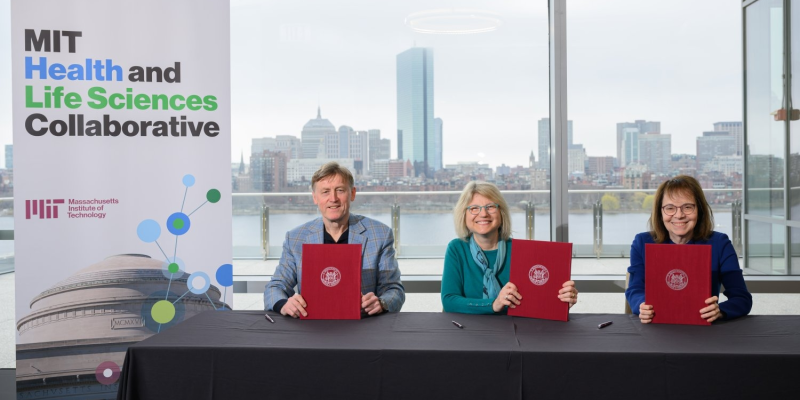
The program’s official launch drew leaders from research, industry, and healthcare to MIT’s Samberg Conference Center to celebrate. If you want to read more details or dive into the official announcement, head over to the source news release at MIT News.


