

 Przez
Przez Exploring the Transformative Role of AI in Jet Engine Design: Insights from the JARVIS Challenge
What happens when artificial intelligence (AI) is mixed with complex hardware design – like jet engines, for instance? The possible integration of AI in confronting intricate physical systems remains a captivating frontier in the exciting world of software engineering. So far, AI tools have proven competent at generating masses of code, crafting documentation, and managing performance. However, their potential in envisioning and constructing complex hardware still begs a lot of scientific curiosity.
Enter the JARVIS Challenge
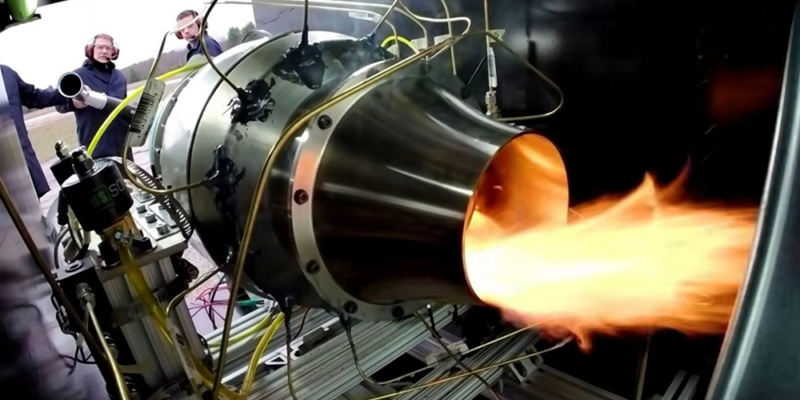
Recently, the Massachusetts Institute of Technology (MIT) initiated the JARVIS Challenge (Jet-engine AI Research and Validation Intensive Sprint). This interesting experiment sparked curiosity as it aimed to evaluate if AI could truly speed up the process of designing, building, and testing a jet engine. The Challenge turned the spotlight on MIT undergraduates who were tasked with constructing a jet engine faster and more efficiently with the assistance of AI.
When it came to the role of AI in the engineering process, prominent voices from the scientific community such as Professor Zolti Spakovszky from the MIT Gas Turbine Laboratory highlighted several insightful points. While understanding AI’s potential to hasten hardware engineering, he emphasized the indispensable nature of human engineering judgment. An AI-native engineer must command control over AI, navigating the intricate balance of trusting and challenging AI and converting its outputs into practical hardware. It seems like for the foreseeable future, AI’s promise may remain somewhat stalled due to the constraint of manufacturing.
From Theory to Action
Over the span of four weeks, students moved from theory to application as they designed, built, and tested a small gas turbine engine. Besides having access to machine shops and commercial software, the participants could use the recently introduced MIT Parley platform, capable of aggregating extensive language models. Not surprisingly, the challenge attracted considerable attention from corporate sponsors looking forward to witnessing AI potentially revolutionize engineering workflows.
While AI proved beneficial in condensing information and suggesting design alternatives, it didn’t come without its share of obstacles. The student teams grappled with AI’s renowned “hallucinations” and shortfalls in grasping physical phenomena. These hurdles sometimes obstructed their progress. Nevertheless, the competition emphasized the essential need for human expertise to effectively guide AI tools towards desired results.
Despite the hurdles, the challenge ultimately underscored AI’s potential in expediting engineering processes. Notably, the victorious team, the 811 Crew, found success by leaning more towards their engineering roots than AI. In doing so, they underlined the crucial role experience and judgment play in the engineering field.
What’s Next for AI in Engineering
The JARVIS Challenge strengthened the notion that human proficiency remains a critical element despite the advantages offered by AI. The aftermath of the competition hinted towards a growing role of AI in engineering; however, the importance of education and hands-on experience seemed irreplaceable for fully harnessing AI’s potential.
For additional details, check out the oryginalny artykuł prasowy. Interested in implementing AI in your company? Take a look at AI automation solutions at implementi.ai.


