

 By
By AI Tool CellLENS Offers Breakthrough in Cancer Cell Profiling and Precision Medicine
AI and the Future of Cancer Therapy
If you asked most oncologists a decade ago what the future of cancer treatment would look like, few could have imagined having therapies tailored so specifically that each one targets the actual quirks of an individual’s tumor. But thanks to cutting-edge research and the relentless march of technology, this is rapidly moving from dream to reality. The secret? A much deeper understanding of what makes each cancer unique on a microscopic level, and the powerful new role artificial intelligence is starting to play in interpreting and acting on all that complexity.
The reality is that tumors aren’t uniform—cells inside the same tumor can be wildly different from each other, let alone between patients. This can absolutely reshape how diseases respond to certain drugs, which is why zeroing in on those differences is so crucial. In the past, scientists would study cancer by looking at one aspect at a time: a gene, a protein, or how the cells look under a microscope. While this approach gave us valuable clues, it’s like reading a novel but only looking at random paragraphs—there’s no way to see the entire narrative of the disease. What’s needed is a way to weave all those perspectives together, and AI is now making that possible.
A New Approach: The CellLENS Revolution
This brings us to CellLENS, a novel deep learning tool developed collaboratively by scientists from some of the biggest names in research—MIT, Harvard Medical School, Stanford, Yale, and the University of Pennsylvania. Unlike typical AI systems that work in narrow domains, CellLENS is designed to get a 360-degree understanding of individual cancer cells. It combines three key aspects: what molecules the cell expresses (like RNA and different proteins), where those cells are physically located in the tissue, and what they look like under the microscope. In doing so, it can see behavior patterns in the cells that traditional analysis would miss.
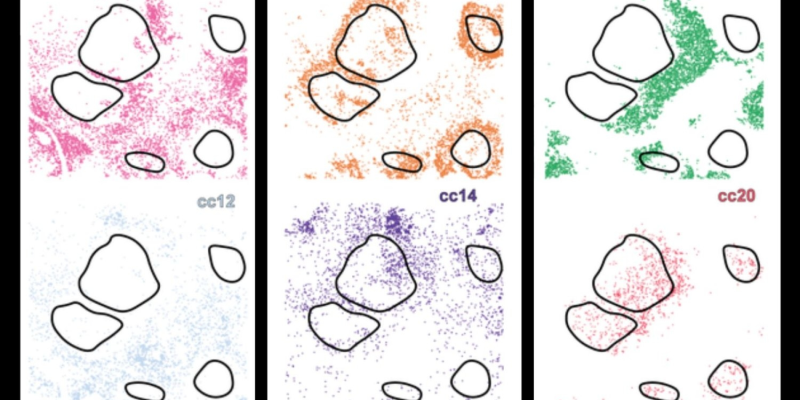
Here’s what that means in practice: It’s possible for two cells to look almost exactly alike in isolation, but when you factor in what they’re doing and where they’re sitting in a tumor, their roles can actually be completely different. CellLENS can group and distinguish these cells by integrating all this information. For example, what used to be labeled simply as “a T cell” by a scientist is now, thanks to CellLENS, recognized as a T cell actively engaged at a particular edge of a tumor, perhaps fighting the cancer or, in some cases, being suppressed. This kind of detail is a huge leap forward in understanding what’s really happening at the smallest scale.
What This Means for Cancer Research and Patients
The implications are enormous. With this new clarity, researchers are better equipped to discover hidden populations of cells and learn precisely what roles they play—an insight that could help pinpoint new biomarkers, which are the cellular signals doctors use to diagnose, predict disease course, or decide on a course of treatment. This could even pave the way for therapies aimed at specific subtypes of cells, making treatments more effective and less toxic for patients.
One of the existing problems with modern treatments, especially immune-based therapies, is that they often overlook the fine details of a tumor’s geography. Some immune cells show up only at the borders of a tumor, and missing this can render a therapy ineffective. By capturing not just what’s inside the cell but where it is and how it fits into its neighborhood, CellLENS adds an entirely new layer of understanding.
In real-world tests, including tissues from healthy samples as well as cancers like lymphoma and liver cancer, CellLENS has already pinpointed rare immune subtypes and highlighted the connection between their behavior, their location, and the progression of disease. This insight opens up new avenues for early detection, smarter diagnostics, and, most promisingly, more targeted—and successful—treatments.
The researchers leading this work believe that the true magic lies in combining rich information about every individual cell with analytical models sophisticated enough to make sense of it all. It’s not just about measuring volumes of data, but turning it into something actionable that clinicians can use to nominate new therapeutic leads and, most importantly, help patients.
Tools like CellLENS are pushing the boundaries of what’s possible in precision medicine, turning the dream of truly individualized cancer care into a tangible hope for many patients. With every deeper dive into the cell-level details, the future of how we understand and treat cancer gets a little brighter.
Read the original article at MIT News: https://news.mit.edu/2025/ai-system-uncovers-hidden-cell-subtypes-boosts-precision-medicine-0711


