

 By
By Bridging Science and Policy: MIT Students Advocate for Federal Research Funding
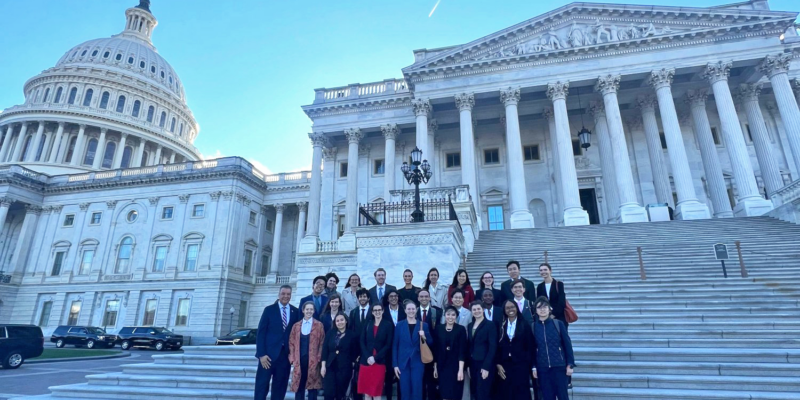
This spring, a team of 25 motivated MIT students and postdocs set off on an inspiring journey to Washington, D.C.—a mission to engage with congressional aides with the purpose of promoting consistent federal support for scientific research. This is of utmost importance due to recent cutbacks in National Science Foundation programs and sustained ambiguity regarding the federal research budget.
The Power of MIT’s Science Policy Initiative
Each spring, the MIT Science Policy Initiative (SPI) gather their troops for their Congressional Visit Days (CVD). This program serves as a riveting introduction to federal policymaking to graduate students and postdocs. It spotlighted how scientists can play an active role in policy advocacy. Our participants forged connections with MIT alumni and members of the MIT Washington Office based in Washington during their visit, revealing a world where science and public policy merge.
This expedience was spearheaded by Audrey Parker, a civil and environmental engineering PhD student, alongside Ian Robertson, PhD candidate in physical oceanography at MIT and Woods Hole Oceanographic Institute. Reflecting on his personal journey from participant to co-leader, Ian shared, “It was gratifying to build upon the work of previous leaders and provide a stronger CVD experience for new participants, equipping and inspiring them to not only advocate for science funding, but to also present policies related to their individual research.”
Preparing and Advocating for Science in Washington
In the lead-up to their trip, participants were prepared through a series of three training sessions orchestrated by SPI, the MIT Washington Office and the MIT Policy Lab. These sessions offered an in-depth understanding of the federal appropriations process, the influential role of congressional staff in forming legislation, and effective ways of conveying scientific proficiency to policymakers. Mock “Hill meetings” were organized to give the participants practice, letting them flex their muscle with research and policy pitches.
While on Capitol Hill, students safeguarded the future of scientific funding, advocating for fiscal budget allotments and research-specific policies in areas such as AI, environmental science and engineering, energy, space, and health. They didn’t shy away from suggesting amendments to bills, backing current bills, or sponsoring new ones. Particular interest was shown by staffers from both sides of the political spectrum on discussing AI privacy and security and deep-sea mining – a pressing environmental topic.
The visit turned out to be a rewarding encounter for both the MIT delegates and the congressional offices. As Rodrigo Zuniga, a first-year PhD student participant, observed, “Going to Washington, D.C., reframed my understanding of the role of science in politics. Contrary to the polarized Washington seen in the news and social media, there is visible bipartisanship and widespread support for science.”
Engaging Scientists in Policymaking
At a time when scientific and technological matters are continually influencing public policy, programs such as Congressional Visit Days are vital to connect the dots between researchers and policymakers. It is equipping the coming generation of scientists to share the significance of their work beyond just the lab, tightening the bond between the scientific community and the decision-makers who shape its destiny.
Curious about AI automation for your business? Check out innovative solutions at implementi.ai.
For the full scoop on this story, head over to the MIT News.


