

 By
By Enhancing Fish Monitoring with AI: A New Era in River Herring Conservation
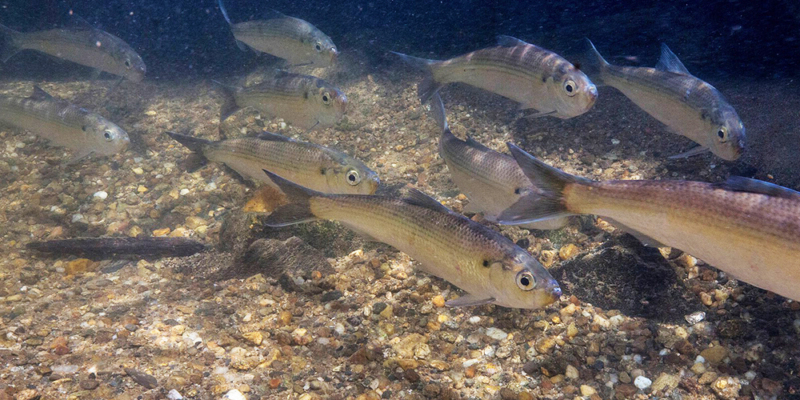
Every spring, river herring that reside in the coastal waters of Massachusetts embark on an eminent quest to their freshwater spawning habitats. Their migration, a critical ecological occurrence, unfortunately, has seen troubling declines in population numbers over the years. To tackle this, experts across the region keep a close eye on their migration using mostly volunteer-based programs and traditional visual counting methods.
A Fresh Perspective on Fishing
The fish movement and population dynamics are paramount to devising conservation efforts and supporting fisheries management. With the beginning of the annual herring run, the task for both researchers and resource managers of estimating and accurately counting the migrating fish population becomes increasingly strenuous.
In order to serve this need, researchers from renowned institutions like the Woodwell Climate Research Center, MIT Sea Grant, MIT CSAIL, MIT Lincoln Laboratory, and Intuit chose groundbreaking methods. Spearheaded by Zhongqi Chen, Linda Deegan, Robert Vincent, Kevin Bennett, Sara Beery, Timm Haucke, Austin Powell, and Lydia Zuehsow, the team developed an innovative method of using underwater video and computer vision to bolster citizen science efforts. This pioneering research was published in the revered journal Remote Sensing in Ecology and Conservation.
Elevating Conservation Efforts with Technology
The research titled “From snapshots to continuous estimates: Augmenting citizen science with computer vision for fish monitoring,” delves into how advancements in computer vision and deep learning offer feasible solutions for automating fish counting. These methods eschew the constraints of time, environmental conditions, and labor intensity found in traditional monitoring methods, promising enhanced efficiency and data quality.
In their quest to achieve automated fish counting, the team developed an end-to-end pipeline—from in-field underwater cameras to video labeling and model training. They collected videos from three rivers in Massachusetts, notably the Coonamessett River in Falmouth, the Ipswich River, and the Santuit River in Mashpee. The researchers then painstakingly labeled and annotated the frames of thousands of video clips to train their computer vision model.
The Future of Fisheries Management
Through comparison against human video reviews, stream-side visual counts, and data from passive integrated transponder (PIT) tagging, the efficacy of the computer vision counts was confirmed. Models trained on rich multi-site and multi-year data performed the best—providing season-long, high-resolution counts consistent with traditional estimates. More impressively, the system unveiled insights into migration behavior, timing, and movement patterns linked to environmental factors.
This revolutionary research aims to push the envelope for computer vision in fisheries management and establish a framework for incorporating technology into conservation efforts for aquatic species. “This excellent work by Zhongqi Chen and colleagues will advance fisheries monitoring capabilities”, opined Robert Vincent. In addition to this, their work will also bolster education and training for student groups, the public, and citizen science groups, thereby fortifying the environmentally and culturally vital river herring populations along our coasts.
Despite these advancements, the need for traditional monitoring prevails. It will ensure data consistency in long-term datasets until automated systems are fully implemented. Even then, computer vision and citizen science will serve as complements to each other. Citizen scientists will hold a pivotal role particularly in maintaining cameras and directly contributing to the computer vision workflow, promising a comprehensive approach to environmental monitoring.
This study was made possible with the financial support from the MIT Sea Grant, among others. For additional details, you can refer to the original news article here. If you’re on the lookout for AI automation for your organization, take a look at the solutions provided by implementi.ai.


