

 By
By Exploring the Intersection of AI and Human Values at MIT’s SERC Symposium
Unveiling the Future of AI: Highlights from MIT’s Research Symposium
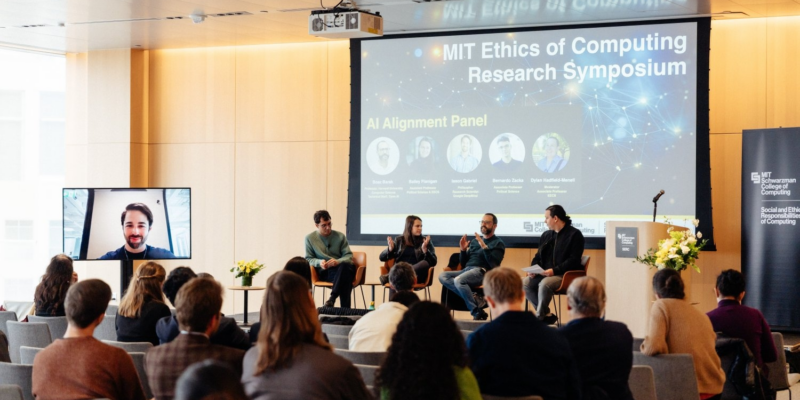
If you weren’t there to witness it firsthand, let me paint a picture of a certain groundbreaking event at MIT’s Schwarzman College of Computing, the Social and Ethical Responsibilities of Computing (SERC) initiative’s stellar full-day research symposium held on April 30. An artful mix of understanding and imagination, the occasion was marked by a deep dive into the transformative force that is artificial intelligence (AI) and, importantly, its societal ripple effects.
The fascinating research strands weaved into the symposium were as varied as they were compelling. SERC’s latest seed grant recipients, for instance, conducted presentations on remarkable topics – think air pollution forecasting and the ethical rollout of computer vision. Panels delved into the intriguing domains of AI alignment and its role in education. Besides, Jon Kleinberg, an esteemed Professor from Cornell University, engaged the audience with a gripping keynote address. Not to mention, an eye-opening poster session where student researchers put their creative and pragmatic SERC Scholars program projects on display.
Moving Towards an Optimistic AI Future: From Commercial to Academic Perspectives
SERC’s co-associate dean, Brian Hedden, was nothing short of excited for the symposium’s happening. A professor of philosophy, Hedden expressed genuine awe at the innovative AI research at MIT geared towards morally and economically benefiting society. Indeed, the symposium echoed this ethos.
The esteemed panels in attendance took on the big questions around AI alignment and the incorporation of ethical values. Google DeepMind’s Iason Gabriel likens AI to a law interpreter, a nod to the importance of AI reflecting our moral core. The assistant professor of political science, Bailey Flanigan raised crucial points around the governance of AI systems, while Bernado Zacka weighed on understanding the wisdom within existing systems. Nonetheless, despite the challenges, optimism around the future of AI was unmistakably in the air.
On the topic of AI’s role in education, the discussion centered around the ethics of its use while remaining cognizant of maintaining academic integrity. MIT stalwarts Eric Klopfer and Samuel Madden covered whether AI, in its existing form, is simply unloading work or facilitating conceptual understanding. Justin Reich suggested student engagement in AI use discussions, while Pat Pataranutaporn, from MIT Media Lab, advocated for an AI that promotes creativity and critical thinking.
Peering Into the Window of AI: The Human Reasoning Paradox
In his keynote address, Jon Kleinberg explored the fascinating contradictions between AI’s worldview and ours – a subject that resonated deeply with the attentive crowd. The crux of his argument rests in the danger of humans misunderstanding AI’s predictive simulations – a thought-provoking point to ponder.
The event beautifully highlighted the importance of human values in AI development, a central theme that reverberated throughout the symposium. This need to spark a dialogue between technology and ethics was not only a beacon for the day’s proceedings but also a bellwether for future computing innovations.
If you’re on the lookout for AI automation solutions that can transform your company, implementi.ai is worth a visit. For more extensive coverage of this futuristic symposium, check out the full article.


