

 By
Exploring the Intersection of AI and Neuroscience: How Artificial Neural Networks Inform Our Understanding of the Brain
Understanding AI’s Learning Journey
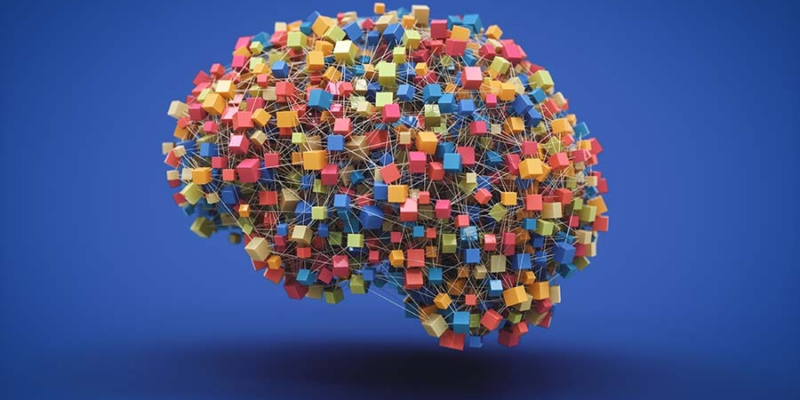
The realm of artificial intelligence (AI) is swiftly advancing. It’s now capable of performing tasks that were once deemed exclusive to human intelligence, like image recognition, generating language, and writing computer code. Central to this impressive progress are artificial neural networks, which improve their performance by reorganizing themselves, much like our brain’s circuits.
However, as AI gets more sophisticated, it begs the question: What can these machine systems teach us about the brain’s learning processes? Which models provide the most insightful information? Researchers from MIT’s McGovern Institute for Brain Research and the K. Lisa Yang ICoN Center tackled these questions in a recent study published in PNAS. They propose that an artificial neural network’s learning approach’s biological plausibility can be assessed by its ability to self-organize, independent of developer intervention.
They show that with initial instructions on how and when connections should evolve, a network of randomly connected units can transform into an efficient data processing system. It learns from the data it encounters, much like how our brains process new information.
Comparing Biological and AI Learning
“AI technology today is highly effective,” explains Qianli Liao, a postdoctoral fellow at the K. Lisa Yang ICoN Center, “but it doesn’t necessarily replicate the brain’s learning algorithm.” Liao, along with his colleagues, MIT professors Tomaso Poggio and Mark Harnett, notices that engineers design the rules for how connections change as an AI processes data and receives feedback. Although this approach is potent in training AI, these networks may not yield much insight into biological learning. “The brain organizes itself. We need to comprehend how simple rules guide this organization,” Liao adds.
This understanding of the brain’s function plays a pivotal role in creating new therapies and prevention strategies. Liao points out emerging applications like brain-computer interfaces, which could restore communication abilities or help paralyzed patients control neuroprosthetic limbs. Their endeavor opens up a whole new world of possibilities for exploring brain mechanisms.
The Future of AI Learning
Meanwhile, Liao, along with fellow researchers Ziyin and Gan, have embarked on the mission to develop a self-organizing computational network capable of learning on its own. They’re harnessing simple rules that dictate the rewiring of brain circuits during learning, such as neurons that ‘fire together’ tend to strengthen their connection. Through these mechanisms, the network can recognize patterns and classify images, using self-assembling motifs as key building blocks. The network optimizes itself by responding to errors, a process akin to gradient descent, a widely used technique in modern AI applications.
While this self-organizing network doesn’t learn exactly like the brain, it marks a significant step towards biological plausibility. “Self-organization is the first high-level framework,” Liao shares. “Once we establish this measure, we can explore further.” Ultimately, while the main goal is to better comprehend the intricacies of the human brain, this knowledge can also enhance machine learning systems, allowing engineers to develop networks that function more efficiently or mimic human behavior more closely.
Are you seeking AI automation solutions for your company? Explore the possibilities with implementi.ai. To delve deeper into this subject, check out the original news article here.


