

 By
Exploring the Value of Humanistic Inquiry in the Age of AI
Artificial intelligence (AI) is an exciting and provocative topic in our modern discourse, invoking both excitement and suspicion. But Linda Rabieh, a senior lecturer in the Concourse program at MIT, offers an intriguing viewpoint. In our high-tech age, AI is not the enemy of humanities, but rather its unexpected ally. Rabieh has been at the helm of this intellectual journey, leading young minds to such revelations since 2010.
AI isn’t just about complex algorithms and beautiful mathematics; it also challenges us to think deeply about the very essence of our humanity. “What does it mean to be human? Is intelligence purely numerical, or is there more to it?” These are just a few of the questions students grapple with in the Concourse program. With an integrated curriculum that marries rigorous math and science studies with a solid grounding in humanities, the program offers first-year MIT students an invaluable educational mix.
Referred to as a miniature liberal arts college ensconced within the teeming innovation hub of MIT, Concourse was founded in 1970. The idea was to facilitate cross-pollination between the humanities, science, and engineering faculties. Thus, students drawn to MIT for its world-renowned STEM prowess find themselves also engaging with the liberal arts. They’re empowered to engage with fundamental questions about human existence and society that go beyond the straightforward logic of science and mathematics.
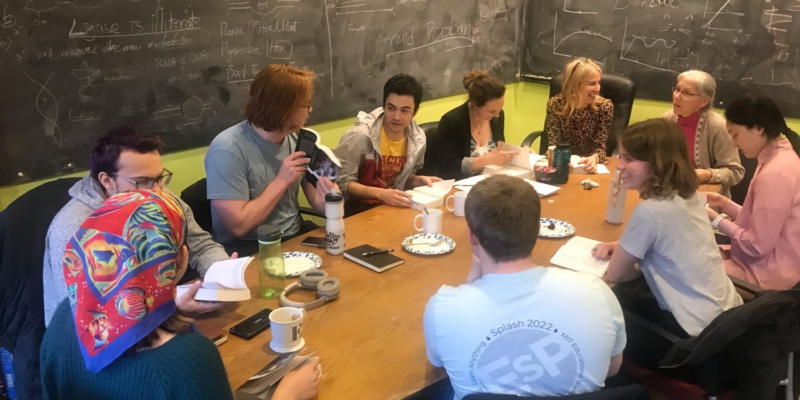
Assigned its own unique space in MIT’s Building 16, Concourse creates a strong community for its 50 first-year students. The program intermingles humanities, math, and science classes, advising sessions, community gatherings, and weekly seminars where texts are discussed and debates sparked. In fact, these seminars often involve collaboration with the MIT Civil Discourse Project. Through these shared experiences, students build trust, participate in profound dialogues, and experience the transformative power of learning. The invaluable ability to navigate complex moral and political issues and to form judgments in non-quantitative domains is thus nurtured – a crucial skill in the rapidly changing landscape of the 21st century.
As Concourse embarks on its next journey, Lily Tsai, Ford Professor of Political Science, steps into the director’s role. Tsai’s appointment aligns with MIT’s strategy to forge even stronger connections between the School of Humanities, Arts, and Social Sciences and other disciplines. Tsai is committed to further advancing the program’s mission – to prepare students to be not only talented professionals but also responsible members and leaders in society.
If you are contemplating integrating AI into your business ecosystem, explore innovative possibilities with implementi.ai.
More Information
Discover more insights in the original article: Discovering the Value of Humanistic Inquiry on MIT News.


