

 By
Revolutionizing RNA Vaccines: Overcoming the Cold Chain Challenge
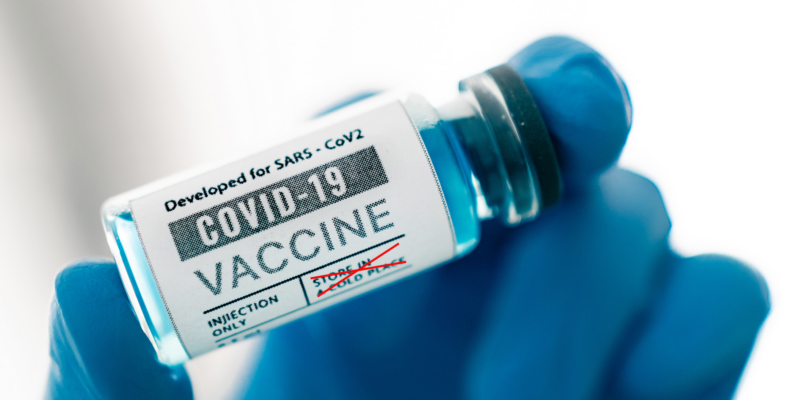
Amid the successful use of RNA vaccines in the fight against Covid-19, scientists are now turning their attention to harnessing these vaccines in tackling other diseases, including cancer. However, a major obstacle in the development and distribution of these vaccines has been their requirement for ultra-cold storage. This has been a herculean issue to overcome, but there has been a breakthrough by researchers from the Massachusetts Institute of Technology (MIT).
Overcoming the Cold Storage Challenge
They utilized artificial intelligence (AI) to revolutionize the way these vaccines are formulated. The AI algorithm essentially tinkered with lipid nanoparticles (LNPs), which typically carry mRNA vaccines into the human body. This led to a breathtaking innovation: it made the vaccines more heat-resistant. The result? Vaccines that could maintain stability at room temperature for up to one year or withstand nearly 100 degrees Fahrenheit for a full two months!
The team didn’t stop there. They tested these heat-resistant vaccines on mice and found they triggered an immune response akin to the one triggered by Moderna’s mRNA Covid-19 vaccine. The really mind-boggling piece here is that AI sped up the whole process by reducing the number of experiments required. This AI-driven innovation shows that small data can indeed have a big impact.
As Ana Jaklenec, a chief investigator at MIT’s Koch Institute for Integrative Cancer Research, pointed out, the algorithm’s strength lies in being able to work with small datasets to create much more efficient formulations focused on stability. As proof of their success, results of the study were published in Nature Biotechnology, which was led by Jaklenec and Robert Langer, with graduate students Jinbi Tian and postdoctoral scholar Khanh Tran as lead authors.
The Transformative Power of Machine Learning
Another central figure in these experiments is RNA, a molecule known for its fragility. Traditionally to prevent its degradation, and to enable it to enter cells smoothly, LNPs have been used to stabilize it. But even with this approach, the vaccines must be stored in cold conditions, posing distribution difficulties to parts of the world without frigid storage facilities. Increase in heat tolerance of the RNA vaccines, therefore, broadens the scope of distribution possibilities and even opens doors to inventive delivery methods, such as microneedle patches.
In the past, attempts were made to add ‘excipients’ to LNPs to reduce their temperature sensitivity but they worked to an extent only. Jaklenec and Langer’s recent endeavor, however, made use of polymer-stabilized LNPs that showed higher resistance to temperature, though they differed from FDA-approved formulations used by Moderna and Pfizer.
Given the setbacks in earlier methods, the researchers decided to adopt machine learning. In partnership with MIT’s Computer Science and Artificial Intelligence Lab (CSAIL), the team set up an algorithm that was able to identify a stable formulation with minimal iterations, in a matter of weeks – much faster than conventional approaches. The team even managed to stabilize LNP formulations similar to Pfizer’s vaccine, showcasing the potential of the algorithm to adapt to a variety of mRNA recipes.
The Future of Vaccine Development
The successful trial of the new LNP formulation involved packaging Covid-19 mRNA antigens and storing them at high temperatures. Mice vaccinated with these particles exhibited strong immune responses, on par with the responses from traditional LNPs. Excitingly, the team also developed microneedle patches containing the heat-resistant formulation. These patches triggered comparable immune responses to injectable RNA vaccines, expanding the applications of mRNA vaccines and other advanced drug delivery systems.
With partial funding from the Gates Foundation, this game-changing research holds a tremendous promise for the future, not just for vaccine distribution, but valid across various sectors and companies ready to integrate AI automation into their business model.
For more details about this ground-breaking research, visit MIT News.
If you’re a business considering AI automation, explore the limitless possibilities with implementi.ai.


