

 By
By The Untraceable Origins of AI-Generated Art: Attribution Decay and Its Implications
As the world of artificial intelligence continues to grow, a pertinent question arises: Who should get credit when an AI generates an image? This question isn’t merely a philosophical quandary; it’s a matter that determines the outcome of many global legal disputes, licensing negotiations, and regulatory decisions. Artists want acknowledgment, companies aspire for clear-cut definitions, and regulators scramble to find a reliable framework to assign responsibility. Yet, recent research has suggested that finding an answer might not be as straightforward as it initially seemed.
A study from MIT’s Computer Science and Artificial Intelligence Laboratory (CSAIL) suggests that for AI models based on large datasets, it can be almost impossible to trace the creativity back to its source. However, this isn’t due to the impossibility of finding the answer but a curious concept termed ‘attribution decay.’ Over time and with increasing data, the relevance of individual training examples diminishes. At a point, even the deletion of a single image—or all images by a specific artist—would not alter the generated output.
The Investigation and Findings
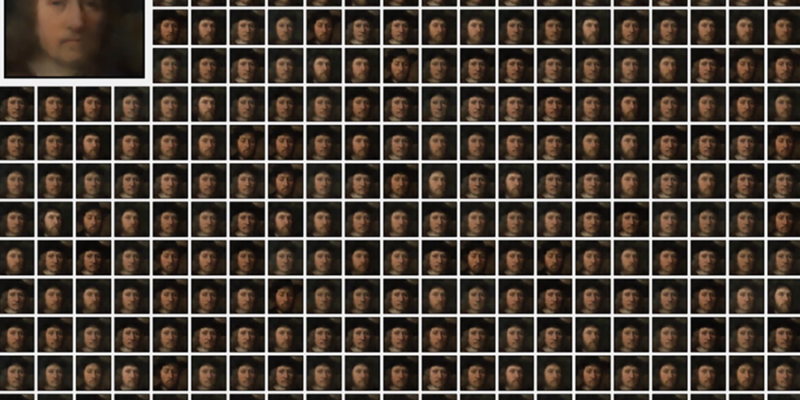
The researchers, led by Zheng Dai, a former MIT CSAIL researcher, identified a way to test the ‘attribution decay.’ Intriguingly, they developed an innovative method known as “diffusion ensemble.” This setup features numerous smaller elements, each trained on different data fragments, enabling researchers to exclude specific images without the need to retrain the model. Essentially, it allowed them to glimpse into what they call ‘counterfactual universes’—imagining all possible variations of an image, each the result of removing a different chunk of training data.
The team trained 24 ensembles on datasets ranging from 256 to over 160,000 images, revealing a predictable pattern: the larger the training sets, the smaller the counterfactual radii, suggesting minimal influence of any individual data point over the final image. This discovery holds over various measurement methods, underscoring the solidity of the findings.
Legal Intricacies and The Unresolved Questions
The fallout from this research nudges the legal domain, especially when determining if AI-generated outputs deem as derivative works. The models seem creative, presenting unique outputs instead of sheer replicas. Consequently, it casts a new light on concepts around fair use, copyrights, and compensation for original creators. However, uncertainties remain if large-scale language models may exhibit similar decay as the diffusion models studied in the research.
Even as the industry works to leverage these findings, Cornell Law School’s James Grimmelmann suggests considering alternative methods for assessing potential copying as the paper suggests complex models might fail conventional attribution.
Supported by Schmidt Futures, this revolutionary research is expounded in an open-access paper in Nature Communications. For businesses exploring AI applications, aligning with cutting-edge technologies like these can truly alter the game. Feel free to get in touch with us at implementi.ai to learn about harnessing the power of AI automation for operational efficiency and innovation.


